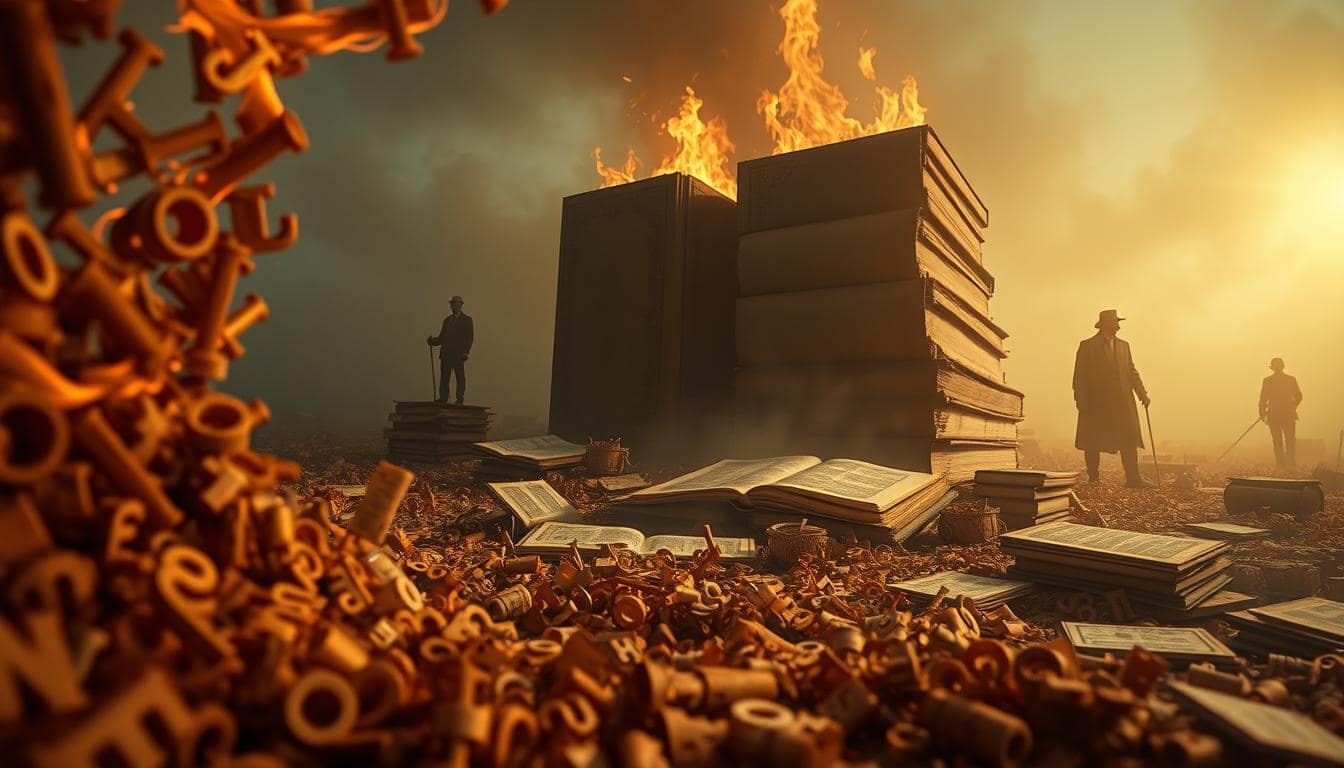
André Breton once said, “Beloved imagination, what I most like in you is your unsparing quality”. This was a call to arms against the dullness of everyday life. The 1924 Manifesto of Surrealism was a bold statement. It challenged society with dreams, Freudian ideas, and a rejection of rational thinking.
Surrealist writers didn’t just play with words. They explored the depths of madness, using their subconscious as a revolutionary tool. They practiced automatic writing and challenged traditional views on love. But what your English teacher might not tell you is that these poets were also political activists.
Why does Breton’s work continue to influence us today? It’s because his team believed in the power of the mind. They didn’t just reject the ordinary—they destroyed it. This legacy can be seen in everything from Dali’s art to today’s surreal trends on TikTok. Their work was raw, radical, and sometimes crazy. And that’s exactly what art should be.
Why Words Matter in Surrealism
Surrealism wasn’t just about painting weird clocks. It was about changing how we see the world with words. Words were used like tools to cut through reality. Ink was like graffiti, used to make a point.
Why stick to simple writing when you can rewire consciousness? It’s like a secret code to unlock new ideas.
Typographic Revolutions
In 1919, André Breton and Philippe Soupault were in a Paris café, creating something new. They called it “sleepwriting,” writing without thinking. It was a way to challenge the usual way of thinking.
Here’s why it was groundbreaking:
- Freud’s dream logic helped spark creativity
- Random words helped sneak past censors
- Broken sentences showed the cracks in society after WWI
Dalí later took this idea further with his paranoiac-critical method. He showed that being paranoid could actually be productive. (Note to conspiracy theorists.)
Ink-Stained Subversions
Surrealists didn’t just write manifestos; they declared war. Take Mandrágora’s 1938 “poesía negra” manifesto. It was a mix of poetry and protest.
They used Freud’s dream analysis to uncover political lies. They printed journals on cheap paper to avoid being caught. And they used automatic writing to speak out together.
While your dream journal might be forgotten, Robert Desnos could write poems in trance states. Guards found him dictating poems after a raid. That’s dedication.
Paul Éluard: Poetry & Love
If love were a battlefield, Éluard would’ve won wars with sonnets instead of swords. The French poet didn’t just write verses; he turned desire into revolutionary manifestos. His work shows that in surrealism, the personal is political. This is true, even when your love life involves three marriages to fellow avant-garde firebrands.
Erotic Geometries
Éluard’s love poems are like blueprints for emotional architecture. Take The Earth is Blue as an Orange—a title that’s less fruit salad, more Freudian kaleidoscope. His romance involved:
- Mathematical metaphors (comparing lovers’ curves to parabolic equations)
- Layered symbolism (apples as both temptation and communist ideals)
- Volcanic tenderness that erupted without warning
This wasn’t Hallmark card material. When his marriage to Gala disintegrated (she left him for Dalí), Éluard turned heartbreak into literary napalm. He burned down norms about marriage and monogamy.
Resistance Rhymes
By 1942, Éluard’s pen became a resistance fighter. His poem Liberté circulated through Nazi-occupied France like contraband candy—sweetness wrapped in subversion. How did he outwit censors?
- Used nursery rhyme rhythms to mask anti-fascist messages
- Embedded coordinates for underground meetings in metaphor
- Published under 14 pseudonyms simultaneously
The Gestapo never caught on that “Pauvre Jean” and “Maurice Hervent” were the same man. He wrote “I was born to know you / To name you / Liberty” between air raid sirens. His 1943 collection Poetry and Truth became the surrealists’ answer to Molotov cocktails—equally incendiary, far more precise.
Philippe Soupault: Automatisms and Experiment
If Salvador Dalí painted dreams, Philippe Soupault turned typos into weapons. He co-authored surrealism’s first automatic text, performing linguistic exorcisms. While Breton theorized about Surrealist automatism, Soupault made typewriters into Ouija boards. He channeled raw thoughts, faster than censorship could stop him.
Ghostwritten by Chance
The Magnetic Fields (1919) feels like a drunk call from the collective unconscious. Soupault and Breton wrote it in 8 days, creating phrases that puzzle literature professors. Phrases like “The headless ducks drink gasoline” were not poetry but cognitive dumpster diving.
Their manifesto “How to Write False Novels” showed how reality could be glitched through grammar sabotage.
Collaborative Combustion
Their partnership was intense, like a Dadaist bonfire. Breton’s precision met Soupault’s improvisational jazz, creating a creative tension. They almost fought over a semicolon in Chapter 3, or maybe over the last café crème.
Today, AI chatbots claim to generate automatic text. But Soupault’s work had real stakes. Each page risked sanity, friendships, and safety. When their typewriter ribbon ended, they used red wine—a metaphor in ink.
Aragon, Desnos, Crevel, Péret, Leiris
Imagine a Parisian backroom where typewriters click in time with heartbeats. Crumpled drafts smell like gunpowder. The Surrealist writers weren’t just writing poems. They were crafting verbal bombs.

The Midnight Bureau
Their meetings were intense, like a secret fight club. They used codenames like “The Human Corkscrew” and “Dr. Alphabet.” These writers were a shadow network, mixing art with anti-fascist resistance.
René Crevel wrote verses that were more than words. His final act was a protest against Stalinist purges. It’s a debate about art’s limits.
Benjamin Péret took rebellion to a new level. He mailed explosive sonnets to Franco’s troops during the Spanish Civil War. His Molotov tercets were a mix of Dadaist nonsense and deadly precision.
Paper Guillotines
Their manifestos were blueprints for freedom. The Mandrágora group used haiku against Pinochet in Chile. Robert Desnos’ radio broadcasts in occupied France turned nursery rhymes into anthems of resistance.
Here’s where women in surrealism change the story: Claude Cahun’s gender-fluid photography was inspired by Michel Leiris’ studies. Her self-portraits were more than avant-garde—they were acts of resistance against the Third Reich. Valentine Penrose used automatic writing to document Nazi atrocities, showing surrealism’s power.
These weren’t just artists dabbling in politics. They were revolutionaries using words as weapons. Their legacy is a lesson in using language as both a mirror and a hammer.
Magazines & Literary Salons
Surrealist publications were like secret clubs for the mind. They were hidden, a bit forbidden, and full of creative energy. In Paris, salons were places for smart debates. But the real manifestos came from secret mimeograph machines in basements everywhere.
Paper was scarce, and the government watched closely. Yet, surrealism found a way to create its most daring texts.
Mimeograph Revolutions
The Mandrágora group in Chile started a journal in 1938. It was more than just poetry; it was a challenge to the status quo. Their production was like a secret mission:
- Paper was taken from government printers at night
- Ink was mixed with coffee grounds for a deeper color
- They printed during blackouts to avoid detection
These typo-guerrillas turned censorship into a game. When they couldn’t say what they meant, they used clever tricks. Like hiding messages in grocery lists or recipes.
Censorship Dodger’s Guide
Surrealist editors were masters of staying under the radar. They used tactics that would impress today’s hackers:
| Tactic | Implementation | Legacy |
|---|---|---|
| Paper Trail Erasure | Using library date stamps as fake publication timelines | Inspired 1960s samizdat movements |
| Anarchist Typesetting | Mixing fonts to create visual static for censors | Paved way for punk zine aesthetics |
| Error Exploitation | Intentional smudges highlighting banned phrases | Turned misprints into collector’s items |
Their real genius was turning censorship into better art. A Portuguese journal’s “censored” issue became a hit. The blank spaces became a test for readers. It showed that facing oppression can lead to amazing stories.
Literary Influence on Visual Arts
Surrealist writers didn’t just share ideas with painters—they infected their dreams. While Breton’s manifestos rattled café tables, his words seeped into canvases like invisible ink. Ever wonder why Magritte’s floating bowler hats feel like three-dimensional poetry? Or why Dalí’s melting clocks whisper Arthur Rimbaud verses? This wasn’t collaboration—it was artistic possession.
Paintbrushes Dipped in Ink
Paul Éluard’s love poems didn’t just inspire Magritte’s The Lovers—they became its skeleton. The Belgian painter once confessed he’d “painted Éluard’s metaphors” when creating his iconic shrouded faces. Dalí treated Rimbaud’s Illuminations like a paint mixer, scribbling lines like “I is another” in his studio ledger. Words didn’t just describe surrealism—they became its DNA.
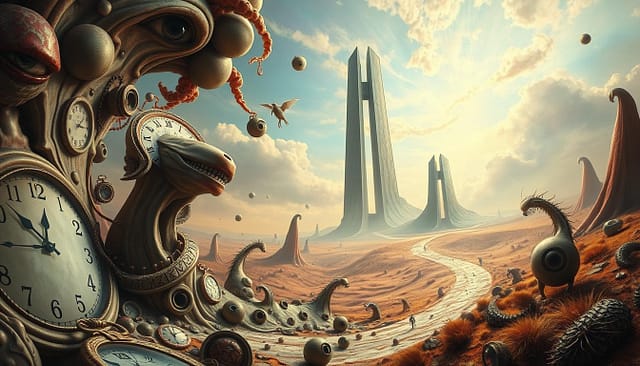
Here’s where the plot thickens: Leonora Carrington and Remedios Varo turned literary surrealism into a feminine art of resistance. While male artists quoted Breton, these women wrote alchemical cookbooks disguised as paintings. Carrington’s The Kitchen of the Great Mother isn’t just a canvas—it’s a recipe for overthrowing patriarchal symbolism. Varo’s clockwork witches? Blueprints for matriarchal time travel.
Their work didn’t just challenge the boys’ club—it exposed its blind spots. While Dalí obsessed over limp watches, Carrington painted self-possessed hyenas hosting dinner parties. Surrealism’s true legacy? Proof that the movement’s most revolutionary visions often wore skirts and carried fountain pens.
The Modern Surrealist Writer
Surrealism’s legacy now echoes through TikTok and AI poetry. Today’s artists use iPhones, creating algorithmic fever dreams that would amaze Breton. Surrealism lives on, even if you think it’s dead.
Algorithmic Automatism
The original surrealists used automatic writing. Now, they have ChatGPT. Artists like Sasha Stiles work with AI to make poetry that’s both new and old.
Consider these shifts in creative tools:
- 1924: Ink blots and Ouija boards
- 2024: Diffusion models and GPT-4 hallucinations
- Next frontier: Brain-computer interface stream-of-consciousness
Hashtag Revolutions
#SurrealistMemes have replaced pamphlets and manifestos. TikTok’s “Dreamcore” aesthetic is like Buñuel’s Un Chien Andalou. Ocean Vuong’s Instagram captions are like Crevel’s writing, but with a modern twist.
Platforms are like the old Littérature magazine. A tweet can spread faster than 1920s Parisian gossip. The surrealist legacy is alive in comments, AI slogans, and live tweets about sleep paralysis.
So, when you see glitch-art NFTs or essays on “post-human collage,” wonder: Is this nonsense… or the next Surrealist Manifesto?
Conclusion
The Mandrágora group’s final manifesto is like a lit match: “The history of *poesía negra* is the story of my life.” This shows surrealism’s true power. It’s not just about pretty words. It’s about using language to challenge empires.
Their mix of surrealism and politics changed how we see resistance. It didn’t just criticize power; it changed our minds about fighting back.
Can you name a movement that has matched surrealism’s power? Punk and meme culture have their moments, but they can’t compare to the surrealist legacy. Éluard’s love poems and Soupault’s automatic writing were tools for revolution.
Your dating app profile could use some “erotic geometries.” Your work emails could use “algorithmic automatism.” Surrealism is alive, waiting for you to use your dreams to challenge the status quo.
Why are you using language like a polite guest instead of a rebel? Surrealism is about using words to shake things up.
Next time you feel like playing it safe, remember Desnos and Péret. They wrote from Nazi prisons and threw verse like bombs. What’s your excuse?