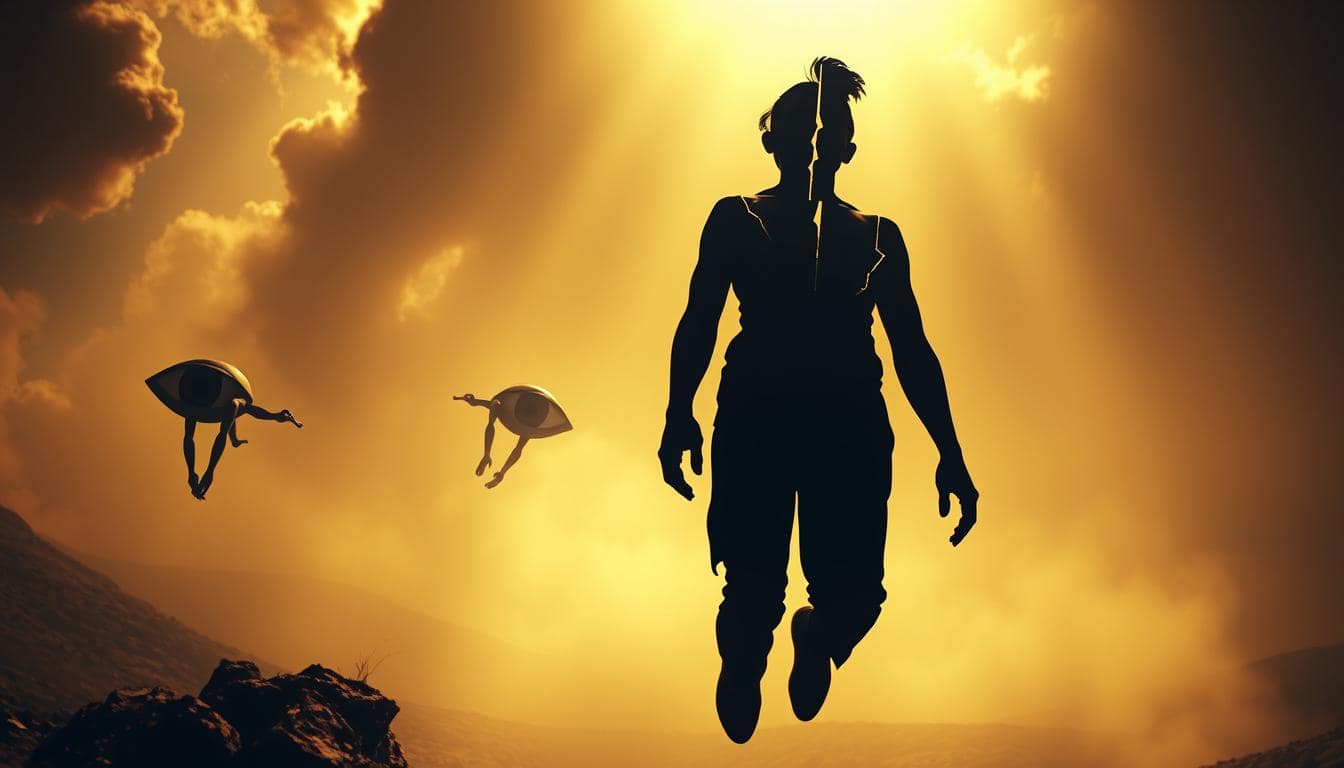
“The most deliberate act in art history was surrendering to accident.” Imagine Jackson Pollock fist-fighting Michelangelo over that idea. Surrealists didn’t just paint dreams—they used chaos, turning psychic automatism into a weapon against reason. It’s ironic: artists planned to avoid planning.
André Breton’s 1924 manifesto called for “pure psychic self-expression,” a big change from the past. It’s like Freud’s free association, but on canvases. The aim was to skip logic and reach “the real functioning of thought.”
But can you accidentally create something great? The movement’s surrealism techniques led to many debates. Was automatic writing truly random, or just cleverly planned chaos? Even Dalí’s method, which he scheduled, showed the balance between control and letting go.
Today, we see this mix everywhere. TikTok’s algorithms and modern poetry slams aim for the same goal. As Breton said: “The imaginary is what tends to become real.” Or simply: the best creativity happens when you’re not trying too hard.
What is Psychic Automatism?
Imagine your phone’s autocomplete feature showing your deepest fears and desires instead of silly texts. That’s what surrealists aimed for with psychic automatism. It was more than art; it was a fight against logic.
Defining “the dictation of thought in the absence of all control…”
André Breton’s definition is like a crazy typewriter’s testimony. Let’s understand it:
- Dictation: From your subconscious, like a mix of Freud and jazz
- Absence of control: No editing, just pure mental energy
Automatic writing surrealism wasn’t fully random. It needed careful planning for chaos. Joan Miró didn’t just spill paint; he planned his accidents using Breton’s definition.
Breton’s Surrealist Manifesto
The 1924 manifesto is like a call to arms for the subconscious. Why “psychic” instead of “automatic”? Breton wanted to highlight:
| Psychic | Automatic |
|---|---|
| Mind as radio receiver | Mechanical repetition |
| Freudian dream logic | Assembly line production |
Breton’s true brilliance? He turned Freud’s dream analysis into a creative force. While analysts listened, surrealists wrote those thoughts, turning therapy into art. They used Remingtons to exorcise demons onto paper.
The manifesto’s lasting irony? It called for free creation while being structured. Even rebellions need rules.
Manifestations in Art and Writing
Imagine when your paintbrush starts playing jazz on the canvas. André Masson’s Battle of Fishes shows this through automatism in art. It’s a mix of sand and paint that looks like Rorschach tests on espresso. His 1927 masterpiece doesn’t just show fish; it becomes them. It’s like seeing your subconscious thoughts come to life.
Then there’s Magritte’s The Difficult Crossing. This is a perfect example of juxtaposition in art. It’s like a fever dream compared to Masson’s work. Magritte’s piece is a ship going through a living room, which is just plain weird.
Surrealists loved to mix things up:
- Dalí’s lobster telephone (seafood meets rotary dial)
- Man Ray’s iron-with-spikes (domesticity meets torture)
- Ernst’s frottage textures (tree bark becomes dinosaur skin)
Ernst’s method, called “objective chance”, lets reality guide the brush. Rubbing pencil over wood grain was more than art; it was hacking reality. It’s like the 1920s version of Photoshop’s “content-aware fill.”
This mix of control and chaos made surrealism special. Automatic writing could create poems that feel like Ikea instructions written by ghosts. Paintings balanced detail with “What if we put a train coming out of a fireplace?” energy. That’s why we love to meme their work today – it’s just so viral.
The Link to Freudian Theory
What do melting clocks and eyeball-shaped bilboquets have in common? They’re both Freudian fever dreams in art gallery disguises. Surrealism took a lot from psychoanalysis, using it like a midnight snack. It made the unconscious mind a key partner in art.
Dalí’s Persistence of Memory didn’t invent droopy timepieces—it used Freud’s condensation idea. Those iconic melting watches symbolize anxiety and nostalgia. Magritte’s The False Mirror (that unsettling eyeball-bilboquet hybrid) shifts emotional weight in a unique way.
Consider this surreal math equation:
| Freudian Concept | Surrealist Translation | Iconic Example |
|---|---|---|
| Dream Symbolism | Visual metaphors bypassing logic | Dalí’s Ants = Sexual Anxiety |
| Repression | Distorted familiar objects | Magritte’s Apple Room |
| Unconscious Desires | Automatic writing/drawing | Breton’s Soluble Fish |
Freud told Dalí, “In classic paintings, I look for the subconscious—in yours, the conscious.” Surrealists became experts in Freudian symbolism in surrealism. Their work is like Rorschach tests for art historians.
The real punchline? Freud’s theories created more modern masterpieces than Botticelli could’ve imagined. Next time you see a melting clock, think of it as a therapy session in oil paint.
Case Studies: Iconic Works and Artists
If surrealism were a therapy session, these artists would be its most unapologetic patients. Let’s look at three masterclasses in unconscious drive. These works are like a loud scream of “Freud would’ve charged extra for this” in every brushstroke and twisted limb.

Arshile Gorky’s The Garden of Wish Fulfillment is more than a painting. It’s like a Rorschach test on steroids. His biomorphic blobs and liquid landscapes let viewers project their own surrealist psychology onto the canvas. Is that a phallic tree or a maternal mountain? The answer reveals more about you than Gorky.
Hans Bellmer’s work is like a nightmare come to life. His dismembered dolls make Chucky look like Cabbage Patch Kids. These contorted figures scream repressed desires through every mismatched joint. Compare this to Miró’s whimsical constellations: same unconscious drive, different meds. One’s a Freudian fever dream, the other a Jungian playground.
Now, let’s talk about America’s answer to automatism – Pollock’s drip paintings. His “action painting” technique took Breton’s concept and added a twist. The floor-bound canvases became maps of objective chance surrealism, where gravity played co-creator. It’s like watching id impulses breakdance.
- Gorky: Botanical Rorschach tests
- Bellmer: Anatomical jigsaw puzzles
- Pollock: Kinetic weather maps of the psyche
What unites these mad scientists? They turned accident into intention. Gorky’s garden overgrowths, Bellmer’s surgical fantasies, Pollock’s controlled spills – all show surrealist psychology thrives when reason takes a break. The canvas becomes a crime scene where id leaves fingerprints everywhere.
Classroom Strategies: Practicing Psychic Automatism
Teaching psychic automatism is about letting chaos happen in a safe space. Think of your classroom as a Dadaist lab where logic takes a break. Here, we turn “toddler scribbles” into lessons using surrealism techniques that even André Breton would love.
Automatic Writing Bootcamp:
- Set a 7-minute timer (Breton’s golden number for The Magnetic Fields)
- Require students to write without lifting their pens
- Ban edits, crossouts, or coherent thought
The first drafts will look like ransom notes from ghosts. Perfect. When a student says “This makes no sense!”, reply with: “Neither does TikTok’s algorithm, yet here we are.” Together, you’ll find poetry in phrases like “the screaming teacup of Wednesday.”
Ernst-Style Collage Warfare:
- Arm groups with vintage magazines, glue sticks, and existential dread
- Challenge them to create surrealism techniques-driven narratives
- Forbid literal interpretations (No “This is a cat on a skateboard” allowed)
The best group project I’ve seen? A 1950s vacuum ad turned into “The Mechanical Widow’s First Communion.” Students debated its meaning for 20 minutes, longer than their TikTok span.
Pro Tip: When parents ask why their honor student’s work looks like Picasso’s angry toddler phase, explain. Surrealism techniques aren’t about skill. They’re about teaching brains to jump over “what makes sense” and land in “what makes wonder.”
Final warning: Your classroom might look like an asylum run by caffeinated raccoons. But isn’t that better than another PowerPoint on onomatopoeia?
Debates: Authenticity and Value in Automatism
Can you plan a surprise party for your subconscious? Surrealists tried, and the debate got messier than a Dali clock melting in July. At the heart of surrealist psychology is a big question: How “automatic” can art be when artists like Dalí plan their “accidents”?
| Artist/Method | Dalí’s Paranoiac-Critical | Masson’s True Accidents |
|---|---|---|
| Preparation Level | Planned hallucinations | Zero premeditation |
| Authenticity Claim | “Directed chaos” | “Pure psychic seismograph” |
| End Result | Persistence of Memory (meticulous) | Battle of Fishes (raw splatters) |
Breton’s original manifesto praised Masson’s automatic drawings as “thought’s pure lightning.” But when Dalí started sketching dreams before sleeping – complete with storyboards and symbolism cheat sheets – purists cried foul. It’s like writing a jazz standard… then performing it note-for-note.
Modern surrealist psychology studies show an uncomfortable truth: Even “spontaneous” creators develop personal shorthand. Your fifth automatic poem might accidentally rhyme because your brain remembers what worked before. Does that make it less authentic, or just human?
Here’s the kicker: Both approaches produced masterpieces. Dalí’s melted watches required obsessive control to look uncontrolled. Masson’s ink blots captured rage he couldn’t articulate consciously. Maybe authenticity in surrealist psychology isn’t about purity, but about how violently you’re willing to shake your mental snow globe.
Broader Influence in Modern/Contemporary Art
Surrealism didn’t just haunt 20th-century galleries—it became a viral sensation in the art world. From Max Ernst’s frottage to Rachel Whiteread’s concrete casts, the surreality concept spread like a cultural game of telephone. It’s like Freud’s dream journal meeting a TikTok algorithm.
Luis Buñuel’s Un Chien Andalou made audiences squirm with its iconic eyeball-slicing scene. It also made philosophers write a lot. Fast-forward to Björk’s “Bachelorette” music video, where gardens grow from books and lovers dissolve into soil. Both are full of symbolism in surrealism, with better special effects.
Abstract Expressionists took cues from Breton. Jackson Pollock’s drip paintings were like psychic automatism in overalls. Even Instagram’s “Surreal Me” filters pay homage to Magritte’s floating bowler hats. (Every smartphone user is now a part-time surrealist—congratulations.)
Modern artists have taken surrealism further, using industrial materials. Rachel Whiteread’s “House” is a concrete cast of an empty Victorian home. It’s like frottage’s moody great-grandchild, asking, “What if buildings dream?” while Ernst’s textures echo from the 1920s.
Critics debate if today’s surreality concept is lacking. But when TikTokers remix Dali’s melting clocks into viral dances, Breton’s revolution lives on—just with better WiFi.
Conclusion
Psychic automatism art whispers through time like a phantom limb of creativity. From Breton’s manifesto to DALL-E’s uncanny outputs, we’ve seen how bypassing reason fuels revolutions. Surrealists used Freud’s couch as a paintbrush – but what happens when machines hallucinate faster than humans?
Modern AI generators mirror automatism’s anti-control ethos with eerie precision. Both trade conscious curation for raw, unfiltered expression. Yet, Pollock dripped his id across canvas, while algorithms churn through data-scraped collective consciousness. One’s a Rorschach test of the soul, the other an infinite digital exquisite corpse.
The real magic lies in the cracks between control and chaos. Miró’s constellation paintings and Ernst’s frottages weren’t accidents – they were calculated surrenders. Today’s debates about AI art’s “authenticity” echo 1920s critics dismissing surrealist works as parlor tricks. History rhymes through its disruptors.
In our Instagram age of manicured feeds, psychic automatism art remains gloriously messy. It demands we confront the unvarnished self – no filters, no undo button. While AI can mimic the technique, can it replicate the vulnerability of André Masson bleeding onto paper during WWII? That’s the $64,000 question hanging over every Midjourney prompt.
The legacy endures wherever creators dare to unclench. Whether through vintage automatic writing or glitch art apps, the surrealist pulse keeps thrumming. Next time you see a DALL-E nightmare or a Twombly scribble, ask: Is this the machine’s unconscious… or ours?