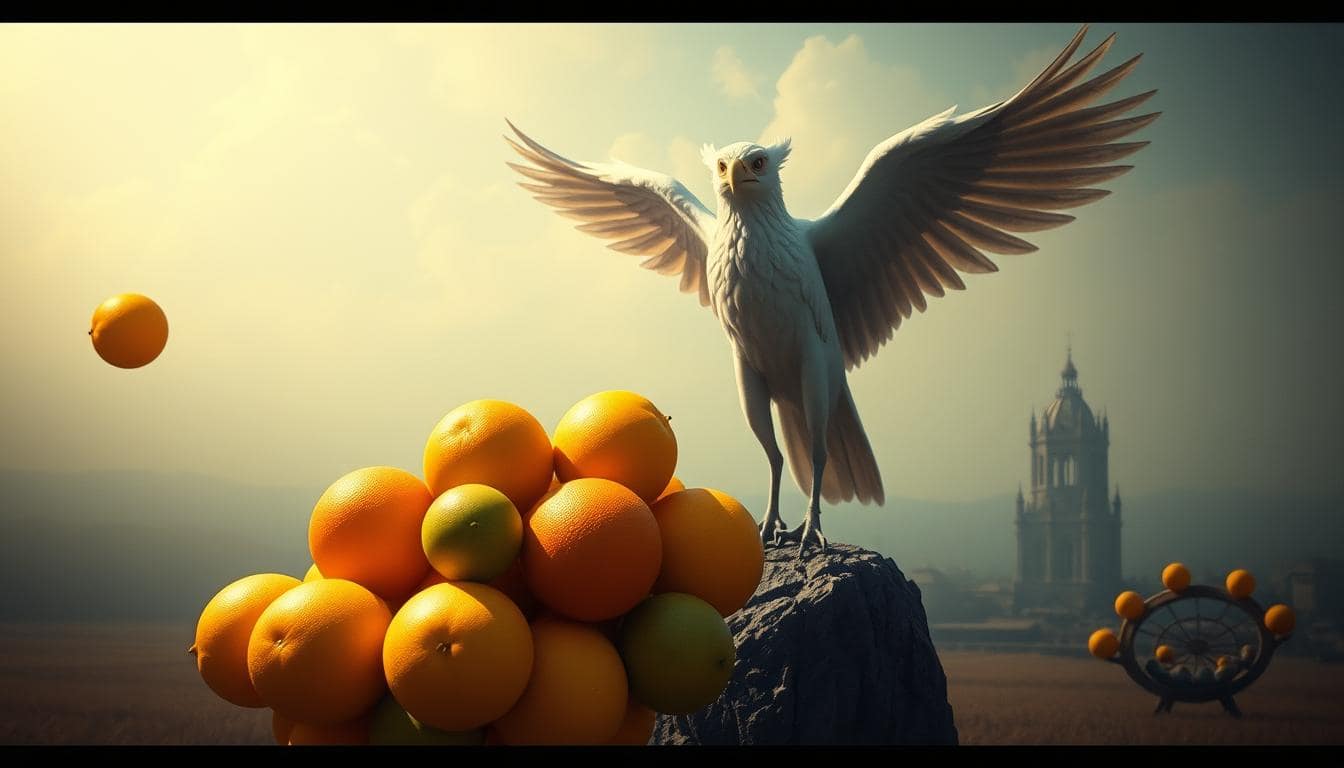
Imagine René Magritte’s men in bowlers floating over apples. It’s a bit like scrolling lists of offshore sportsbooks—mundane details meet the bizarre. It’s like staring into an abyss while pondering “Why did the chicken cross the road?”. This is the heart of surrealist juxtaposition – the mix of logic and madness.
Artist Kate Maggart compared avocados to eyeballs, a clever twist. The Surrealists didn’t just mix odd things. They used these contrasts to shock us. Dali’s melting clocks, for example, mix dream logic with fear.
Art students often just throw images together. But the Surrealists used automatism in art to go beyond reason. It’s like peeking into someone’s subconscious without permission.
Freud’s couch and Dali’s art share a secret. Both explore our deepest desires. But only one needed patients to lie down. The magic lies in making strange images feel as normal as your morning coffee.
Defining Juxtaposition in Art
Let’s get real: juxtaposition isn’t about throwing random stuff together like a messy garage sale. It’s the visual grenade that shakes up meaning through unexpected clashes. Imagine Max Ernst’s bird-human hybrids fighting typewriters while Freud’s ideas on hidden desires echo in the air. That’s not just chaos—it’s a smart mix of opposing ideas.
The V&A Museum shows Dalí’s Lobster Telephone as a perfect example. It’s not just a weird phone with a lobster on it. The lobster’s “biomorphic aggression” against old-fashioned phones reflects Freud’s “the uncanny.” Today, TikTok surrealists mix anime with 1950s ads. It’s the same idea, but with digital tools.
Freud’s dream analysis helps us understand this. His “return of the repressed” shows up when artists combine:
- Rational vs. irrational spaces
- Organic vs. mechanical forms
- Cultural symbols vs. primal urges
Think of this as your art therapy moment. That dream where your childhood home has subway turnstiles instead of doors? You’ve just “Ernst-ed” your subconscious. The flowchart above is more than just pretty—it’s your ticket to creating illogical scenes surrealism that art scholars will love to discuss over coffee.
| Element | Traditional Surrealism | Digital Surrealism |
|---|---|---|
| Medium | Oil paint, collage | AI generators, Photoshop |
| Freudian Trigger | Childhood trauma | Algorithmic bias |
| Audience Reaction | “This challenges reality!” | “Why is my face on a pizza?” |
The real deal is when TikTok creators mix K-pop with Soviet propaganda. They’re not just seeking likes. They’re carrying on Freud’s surrealism through social media filters. The big question? Is your last weird dream secretly genius? (Spoiler: Our flowchart says yes.)
Surrealist Techniques of Juxtaposition
Surrealist juxtaposition is like a visual remix. Imagine Duchamp mixing up reality’s best bits while enjoying Gauloises in Paris. It wasn’t just about putting lobsters on phones. Artists used psychic automatism and objective chance surrealism to shock our minds. They mixed up our views, creating a mix of confusion and wonder.
Magritte’s Hat Trick & Dali’s Jazz Hands
René Magritte’s men in bowler hats floating in the sky were more than quirky. They were deep thoughts. Salvador Dalí’s paranoiac-critical method was like jazz for the subconscious. He made clocks melt to the beat, asking us to question reality.
Schiaparelli’s 1937 shoe hat was a head-trip that mixed fashion and psychology. It was objective chance surrealism in 3D, showing even milliners could be absurd.
Miro’s Spin Cycle & Ernst’s AI Ancestry
Joan Miró’s 1926 ballet costumes were kinetic juxtaposition. Dancers moved like spinning tops in a colorful mess. Max Ernst’s frottage technique, rubbing textures on paper, seems ahead of its time. Add algorithms, and you get today’s AI art.
Instagram’s #surrealism crowd is playing a game, but Breton’s crew was playing a much deeper game. Today’s filters are not as deep as Ernst’s Une Semaine de Bonté. That work turned Victorian engravings into feathered nightmares. The difference between a meme and a manifesto? Existential dread.
Psychological and Visual Effects of Juxtaposition
Why do Surrealist images stick in our minds like gum on a subway seat? It’s because of cognitive dissonance, the fun tension between logic and absurdity. Neuroscientist Kate Maggart’s “beehive-tongue” metaphor shows this well: our minds pull back from strange pairings (like a face made of apples) but also try to figure them out. It’s like biting into a chocolate-covered onion.
Recent MRI studies show how Surrealist works mess with our brains. Looking at Magritte’s “Son of Man” lights up our dream centers like Times Square. This is why Dali’s melting clocks feel so familiar – they mess with our fuzzy logic like nightmares do.
| Art Element | Traditional Use | Surrealist Effect | Psychological Impact |
|---|---|---|---|
| Apples | Symbolism in art | Facial replacement (Magritte) | Uncanny valley response |
| Clocks | Measuring time | Melting forms (Dali) | Temporal anxiety |
| Birds | Symbol of freedom | Mechanical hybrids (Ernst) | Cognitive dissonance |
Corporate ads use this trick to shock us. That perfume ad with a woman’s face and a panther? It’s Surrealism Lite, all shock, no depth. Real Surrealist art, like Horst P. Horst’s fashion photos, makes us question reality, not just our wallets.
Here’s a classroom trick: Have students mix objects from opposite semantic categories (like a rubber duck and a chainsaw). This creates more brain “friction” than usual. The result? Art that surprises and colonizes our minds.
Teaching Juxtaposition: Projects for Students
Today’s students are experts at mixing up reality. They’ve grown up with TikTok filters and AI-generated images. Our goal is to turn their digital skills into automatism in art projects that would impress 1920s Parisian surrealists.
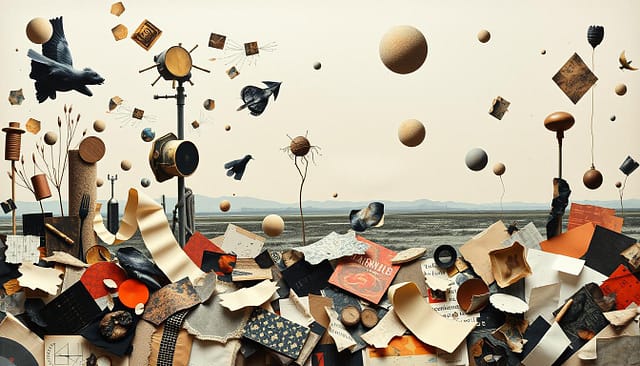
Let’s bring back the exquisite corpse game for today’s students. They’ll work together on a digital collage using Google Slides. Imagine Eileen Agar’s fishnet hats mixed with modern art. To spark creativity, make sure to block the undo button.
- Step 1: Assign body parts (head, torso, legs) to different students
- Step 2: Set a 3-minute timer per section
- Step 3: Require one automatic writing surrealism caption
- Step 4: Host a virtual gallery walk with grandparents as critics
| Grading Criteria | Subversive Potential |
Technical Execution |
Grandparent Confusion Score |
|---|---|---|---|
| 5 Stars | Challenges 3+ societal norms | No visible glue blobs | “Is this NFT art?” |
| 3 Stars | Mildly questions authority | One detached eyeball | “We had real art in my day” |
| 1 Star | Uses glitter unironically | Resembles Pinterest fail | “Call the exorcist” |
Critique sessions are where the magic happens. When Jessica from period 3 defends her melted clock collage, you’ll know you’ve hit a mark. This project might turn more students into post-modern theorists than artists.
Automatism Jam Session Guide
Forget traditional art supplies. Give students spam mail, expired coupons, and ChatGPT poetry. The goal is to create without overthinking. The faster, the better. Bonus points for a piece that looks like an algorithmic nightmare.
Case Studies: Iconic Juxtapositions in Surrealism
Let’s explore two examples of illogical scenes surrealism that changed how we view reality. First, Dalí’s Persistence of Memory shows melting clocks on a barren landscape. It’s like a Spanish sun-drenched Camembert, blending Einstein’s theory with Catalan identity. The melting clocks symbolize humanity’s struggle to control time.
Next, Elsa Schiaparelli’s 1938 Tears Dress turned fashion into a form of psychological warfare. It features trompe-l’oeil rips and “wounds” that make models look like walking memento mori. This mix of Renaissance vanitas and 20th-century trauma shocked fashion critics and likely pleased Freud.
Why do these works continue to stun us? Their symbolism in surrealism challenges our perceptions:
- Dalí used scientific uncertainty (clocks ≠ solid) to question cultural nostalgia (barren Catalonia)
- Schiaparelli combined high fashion with raw vulnerability (silk ≠ skin)
- Both artists used absurd combinations to expose uncomfortable truths about desire and decay
Try a “Spot the Freudian Symbol” game in class with Surrealist art. But be ready for discussions about Dalí’s phallic crutches and Schiaparelli’s breast-shaped buttons. Remember, use seltzer instead of wine to avoid awkward parent-teacher conferences.
These examples show that surrealist juxtapositions were more than just a weird phase in art history. They’re like a visual mic drop, where a lobster telephone and a shoe hat coexist in a shared space.
Modern Art and Legacy
Gen Z might think Magritte is a makeup brand, but their TikTok memes accidentally practice objective chance surrealism better than most NFT “artists.” Let’s explore how 1920s avant-garde tactics now thrive in smartphone screens and algorithmically generated exhibits.
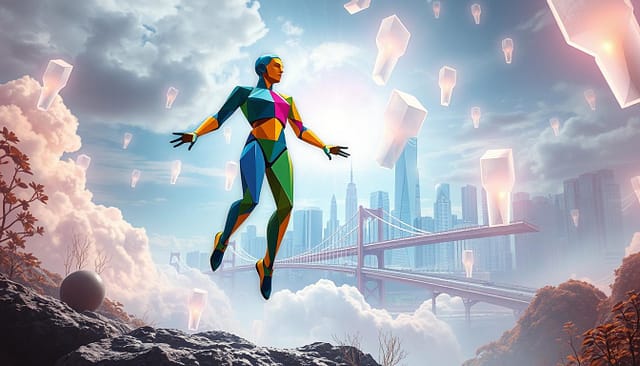
INTER NYC’s infinity rooms—those dizzying mirrored spaces flooding Instagram feeds—aren’t just selfie factories. They’re digital automatism: randomized light patterns and endless reflections that hijack perception like a 21st-century Exquisite Corpse. The #SurrealChallenge trend, where teens juxtapose toothpaste with storm clouds or goldfish with fire hydrants, is pure Dalí-core, just faster and with ADHD-friendly pacing.
But let’s roast the elephant in the virtual room: NFT projects claiming surrealist roots. Most are algorithmic wallpaper slapped with “surreality concept” buzzwords. Remember Lobster Phone? Today’s equivalent might be a bored ape smoking a blockchain cigar—more derivative than disruptive.
| Technique | 1920s Execution | 2020s Adaptation | Cultural Impact |
|---|---|---|---|
| Objective Chance | Ernst’s frottage rubbings | AI-generated “random” NFT traits | ⭑⭑⭑ (Authenticity debates) |
| Unexpected Juxtaposition | Dalí’s melting clocks | TikTok’s #SurrealChallenge | ⭑⭑⭑⭑ (Viral democratization) |
| Automatism | Breton’s free-writing | INTER NYC’s AI light sequences | ⭑⭑⭑⭑⭑ (Mainstream immersion) |
Teaching this to Zoomers? Try these hacks:
- Swap “automatic drawing” with “Google DeepDream collages”
- Rebrand objective chance surrealism as “TikTok’s For You Page logic”
- Challenge students to meme-ify Magritte’s pipe using Snapchat filters
The verdict? Surrealism’s legacy isn’t fading—it’s fragmenting. Between VR exhibits and viral absurdism, the surreality concept now lives where eyeballs linger longest: our dopamine-driven screens.
Classroom Discussion Points
Ever wondered if your students’ dream journals are more revolutionary than their brush techniques? Let’s confront the elephant in the art studio: Surrealism’s messy marriage of Freudian theory and avant-garde privilege. I’ve seen classrooms erupt over this question: “Is Instagram’s algorithm the new André Breton?” – and honestly, the jury’s out.
Here’s your arsenal for sparking (or containing) fiery debates:
- Automatism in art: 1924 manifesto vs. 2024 AI tools. Does MidJourney count as “pure psychic expression” when it generates lobster-telephones?
- The colonial baggage behind Exquisite Corpse games. Who gets to be “irrational” in art history?
- Dali’s mustache vs. TikTok surrealists: Which shocks harder in 2024?
- Can we separate Freud surrealism theories from their problematic roots? (Spoiler: Your ethics professor says no)
Let’s get tactical. Try this face-off during your next critique:
| 1920s Automatism | 2024 Counterpart |
|---|---|
| Breton’s writing under hypnosis | AI text generators |
| Ernst’s frottage techniques | Digital texture overlays |
| Dream journal entries | Social media “Close Friends” stories |
Warning: Students might start arguing whether their Spotify Wrapped playlists qualify as automatism in art. (Pro tip: Lean into it.) The real magic happens when someone asks: “Was Surrealism just rich Europeans cosplaying madness while actual marginalized creators got ignored?” Cue the uncomfortable silence that precedes genuine learning.
Final disclaimer: I take no responsibility if your class divides into pro-Dali and pro-Kahlo factions. But isn’t that exactly what Breton would’ve wanted?
Conclusion
Edward James’ Monkton House defies logic. Its moss-covered bathtubs seem to float, leading to brick walls. This is a form of physical poetry, showing how art can thrive where reason fails.
This 1930s surrealist wonderland mirrors our digital world. Today, we see deepfakes and AI creating strange objects. But true surreality goes beyond just random algorithms.
Now, students can create surreal images quickly, just like Magritte. But the best art comes from a human touch. It’s about combining unexpected things, like a furry teacup with Brexit memes.
Teachers who spot this kind of art are like reality hackers. They look for pieces that are not just weird, but thought-provoking. Like Dali’s ants on a telephone.
They should reject shallow Photoshop tricks. Instead, they should celebrate students who mix subway rats with Renaissance portraits. This makes us question our world.
James’ estate asks a big question: Will future art teachers create new dream worlds? Or will they just play with filters? The answer lies in classrooms where creativity meets unease.
Your turn, reality architects. It’s time to build new dream-labyrinths.