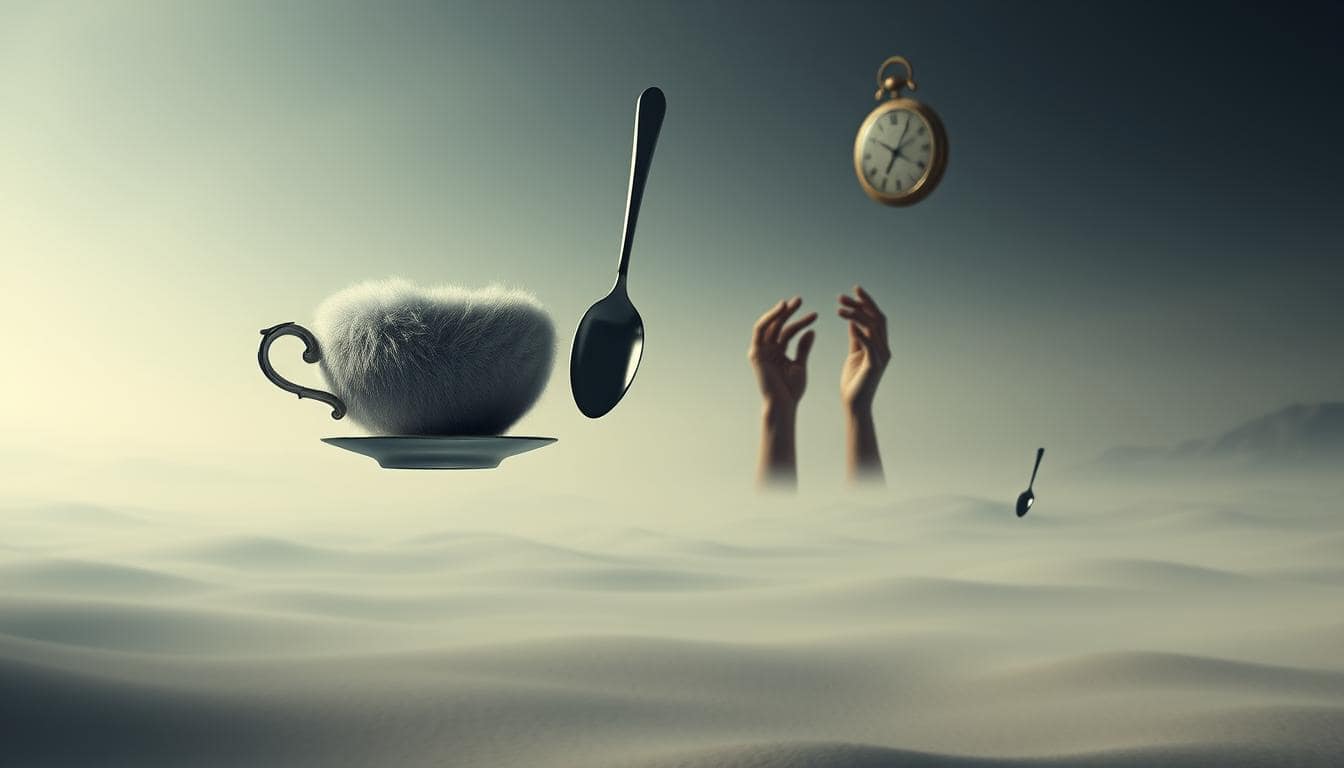
Imagine Salvador Dalí’s mustache in shock. Here was a woman who used teacups and stuffed animals to challenge the Surrealist men’s club. Meret Oppenheim didn’t just play with the strange—she made it her own. Her 1936 Object, a coffee set covered in fur, was a bold statement against household chores and old-fashioned ideas.
While André Breton’s inner circle saw women as muses or fantasies, Oppenheim flipped this around. She worked with Man Ray, posing for his Erotique Voilée in 1933. Then, she outdid her male rivals by mixing everyday items with sensuality. Her work asked: What happens when the objectified becomes the object-maker?
Years before Judy Chicago’s Dinner Party, Oppenheim’s work challenged the art world’s gender issues. Her pieces, a mix of Dada and feminism, continue to speak to today’s surrealist objects. They make us think about whose dreams are valued and whose are seen as odd.
Was she Surrealism’s greatest disruptor or its most honest reflection? Either way, Oppenheim’s work challenges the line between desire and unease. She shows that even a simple spoon can start a big change.
Early Life in Switzerland and Paris
Before her teacup grew fur, Meret Oppenheim was stirring up rebellion in her family’s Swiss parlor. Born in 1913 Berlin but raised in Bern, she learned to subvert polite society. Imagine a teenager sketching nudes during violin lessons, with her banker father’s silver service nearby. Freud would have loved to analyze that.
Paris beckoned in 1932, like a Surrealist Bat-Signal. At 18, Oppenheim left her Swiss upbringing for Montparnasse’s cafes. Her move was like surrealism’s shift from Dada’s chaos.
| Swiss Upbringing | Parisian Transformation | Surrealist Impact |
|---|---|---|
| Polished silverware | Disrupted domestic objects | Fur-lined tableware |
| Structured etiquette | Automatic drawing techniques | Unconscious creativity |
| Alpine isolation | Avant-garde collaborations | Collective manifestos |
What makes Oppenheim’s story vital to women in surrealism? She didn’t just crash the boys’ club – she redecorated it. While male peers mythologized the femme-enfant, Oppenheim weaponized domesticity. Her childhood tea service became her most infamous work, turning comfort into art.
Her journey shows surrealism’s secret: it needed both bourgeois rebels and bohemian outsiders. Oppenheim’s mix of Swiss precision and Parisian chaos created a new language. This language is full of surrealist group history and feminist subtext, seen in every hair of that infamous fur cup.
Oppenheim’s Entry into Surrealist Circles

A 20-year-old Swiss artist, Oppenheim, was in Man Ray’s Paris studio. She was getting her arm inked for his Érotique Voilée series. Salvador Dalí pushed hard for her to join the Surrealists, showing her determination.
Oppenheim arrived in 1933, when Breton was updating his manifesto. She used their fascination with the irrational to her advantage. When Max Ernst drew her as a bird-woman, she worked with him on Une Semaine de Bonté collages.
She turned Surrealist theories on their head with her work. Here’s a table showing how she countered their obsessions with her own material wit:
| Surrealist Figure | Signature Obsession | Oppenheim Countermove |
|---|---|---|
| André Breton | Automatic writing | Object-based paradoxes |
| Luis Buñuel | Eyeball slicing | Fur-lined sensory disorientation |
| Alberto Giacometti | Spindly bronze figures | Organic material juxtapositions |
Her famous teacup was born from debates with Picasso. He said anything could be fur-covered, and Oppenheim made Object in weeks. Breton called it the first Surrealist object, but never admitted it challenged their ideas.
Oppenheim’s work was more than rebellion. It was a virus in the Surrealist language, creating works that were too perfect to ignore. The men who mythologized women found themselves captivated by her fur-lined teacup.
‘Object’ (Fur Teacup) and Its Meanings
What does a teacup lined with gazelle fur say about your mother? Oppenheim’s Object (1936) is like a modern art Rorschach test. It turned a simple joke into a cultural explosion. Let’s explore why this surrealist object is so fascinating.
The Oppenheim cup blurred the lines between everyday and absurd. It was a game-changer. Made after a lunch with Dora Maar and Picasso, it used fur in a bold way. The spoon’s shape is as provocative as it sounds.
There are three main ways to see this work:
- Feminist Trojan Horse: It challenges the idea of women’s work, turning tea service into a form of rebellion.
- Freudian Slipware: The fur hints at jokes about pubic hair, perfect for the psychoanalytic couch.
- Accidental Icon: MoMA bought it in 1936, making Oppenheim their first female Surrealist, a role she didn’t want.
Oppenheim called it a “teenage prank” but curators see it as much more. It’s a Rorschach test, showing different things to everyone. Is it the saucer’s vulnerability or the spoon’s challenge to patriarchy? It’s up to the viewer.
Modern views show it’s even more complex. It was ahead of its time in feminist art, showing the “male gaze.” The fur and porcelain together create a paradox of desire and disgust. It challenges social hierarchy by pairing Chinese fur with European porcelain.
MoMA’s choice of the Oppenheim cup changed art history. It added a “joke” to their collection, making it a symbol of women’s contributions. And we’re all trying to figure out its meaning 88 years later.
Collaborative Work: Picasso, Giacometti, etc.
Behind every iconic Surrealist object is a web of collaborations—Oppenheim’s were more strategic than a corporate merger. While history obsesses over her fur teacup, her real masterpiece was orchestrating alliances with art’s heaviest hitters. Let’s dissect how she out-Dada’d the boys’ club.
In Picasso’s ceramic studio, Oppenheim traded fur for fire. Their 1937 partnership birthed hybrid objects that blurred craft and fine art—a proto-mashup that made Rauschenberg’s combines look late to the party. But here’s the twist: while Pablo played the tortured genius, Meret operated like a Swiss watchmaker—precise, analytical, and quietly revolutionary.
Then there’s Giacometti. His skeletal Point to the Eye (1932) and her Venus Primitive (1962) form a 30-year dialogue across mediums. Both works cage feminine energy, but where Alberto’s bronze bars scream existential dread, Oppenheim’s moss-covered stone goddess whispers: “Try harder, gentlemen.”
Three key collaborations redefine her legacy:
- 1934: Co-creating fur-lined jewelry with Duchamp—five years before the teacup
- 1947: Experimental photography with Man Ray that predated feminist body art
- 1966: Mixed-media installations influencing Judy Chicago’s Dinner Party
AnOther Magazine’s analysis of Giacometti’s cages takes on new meaning when viewed through Oppenheim’s lens. Her collaborations weren’t just artistic exchanges—they were Trojan horses smuggling feminist critique into Surrealism’s inner sanctum. Who needs a manifesto when you’ve got a fur-lined saucer and Picasso’s Rolodex?
So next time someone gushes about that teacup, hit them with this truth: Oppenheim’s greatest work wasn’t an object, but a blueprint for collaborative rebellion. Thirty years before Warhol’s Factory, she proved that art history gets rewritten not by lone wolves, but by networks disguised as salon parties.
Late Career and Second-Wave Feminism
How does an artist become a feminist icon against her own protests? Oppenheim’s late-career pivot was a cultural shock. She said she wasn’t a feminist artist in 1975, yet her fur-lined teacup became a symbol of feminism. Her refusal to be labeled only added to the mystery, like Bowie’s glam rock persona.
The 1974 series Häutungen (Sheddings) became a feminist icon. It showed women breaking free from society, like Ovid meets The Handmaid’s Tale. Judy Chicago included Oppenheim in her 1979 City of Ladies exhibition, linking surrealism’s “madwomen” to feminism’s roots.
Let’s look at two iconic works:
| Aspect | Object (1936) | The Dinner Party (1979) |
|---|---|---|
| Material Subversion | Fur + porcelain | Ceramic + needlework |
| Feminist Critique | Unconscious provocation | Intentional manifesto |
| Cultural Impact | Art history curiosity | Political battleground |
Oppenheim’s work was like a Rorschach test for feminism. Chicago’s vulva-shaped plates shouted revolution, while Oppenheim’s teacup whispered rebellion. Both showed women in surrealism taking back their bodies, one loudly, the other quietly.
Her 1982 MoMA retrospective highlighted the paradox. The artist who didn’t want to be seen as feminist became a key study. Like Patti Smith, Oppenheim’s work grew beyond her own views, reshaping art and feminism.
Oppenheim in Symbolic Art
Imagine a teacup with fur and a stiletto with testicles. Oppenheim’s symbolic legacy turns everyday items into deep, psychological tests. Her 1936 My Nurse shows high heels bound like phallic offerings. It’s not just about gender roles; it’s a bold attack on patriarchy.
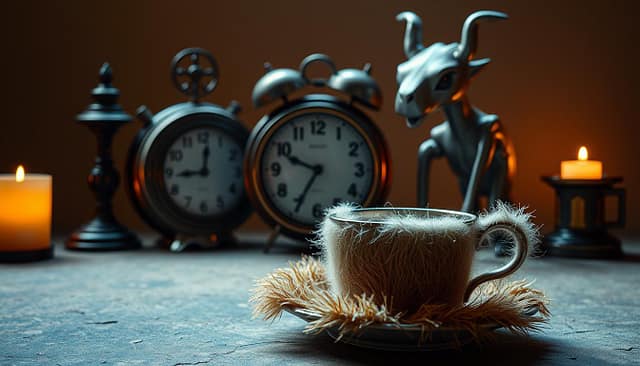
- Alchemical transformations: Spiral motifs in works like 1956’s Femme Étoile mirror DNA structures and psychedelic visions years before the 1960s counterculture
- Body politics: Teeth-lined gloves and fur tableware turn feminine accessories into visceral threats
- Domestic subversion: Everyday objects become portals to the uncanny, challenging Dali’s grandiose dreamscapes
Let’s compare Surrealist symbolism:
| Element | Oppenheim | Dali |
|---|---|---|
| Scale | Teacup-sized revolutions | Cinematic landscapes |
| Materials | Fur, leather, teeth | Melting bronze, oil paint |
| Shock Factor | Quietly radical | Loudly bizarre |
AnOther Magazine says Oppenheim’s work has “erotic undertones.” But she didn’t just hint at sex. She trapped it in fur-lined cages. When her shoes turn into penises, it’s not just for shock. It’s about changing oppression into power.
Her Surrealist objects were like Trojan horses. While men built monuments to themselves, Oppenheim sneaked feminist messages into art. Today, Tracey Emin’s unmade bed is a result of this clever trick.
So, why does Oppenheim’s work shock us today? Maybe it’s because her teacup with fur makes us uncomfortable. Or perhaps it’s because her spiral motifs, like DNA helices, show that art can predict change.
Conclusion
Meret Oppenheim’s life was like a guide to breaking free from reality. Her famous fur-lined teacup continues to shock us, even after 80 years. It challenges the traditional art world in a bold way.
Today, her work feels even more daring than when she first made it. This is because of the rise of digital art. Yet, Oppenheim’s teacup stands out for its raw, physical presence.
While digital art is everywhere, Oppenheim’s teacup makes us think about touching hairy porcelain. It challenges our smooth, online world. Instagram artists try to create weird, beautiful images, but none match the shock of Oppenheim’s teacup.
Was Oppenheim a pioneer in challenging culture? Her work with Man Ray and Breton set the stage for today’s identity politics. Her teacup, with its furry surprise, was a bold statement against traditional norms.
Now, museums might wonder: Does Oppenheim’s work make sense today? In our era of AI and weird art, her teacup seems like a missing piece of surrealism. Next time you make coffee, listen closely. You might hear the faint sound of history’s spoon against fur.