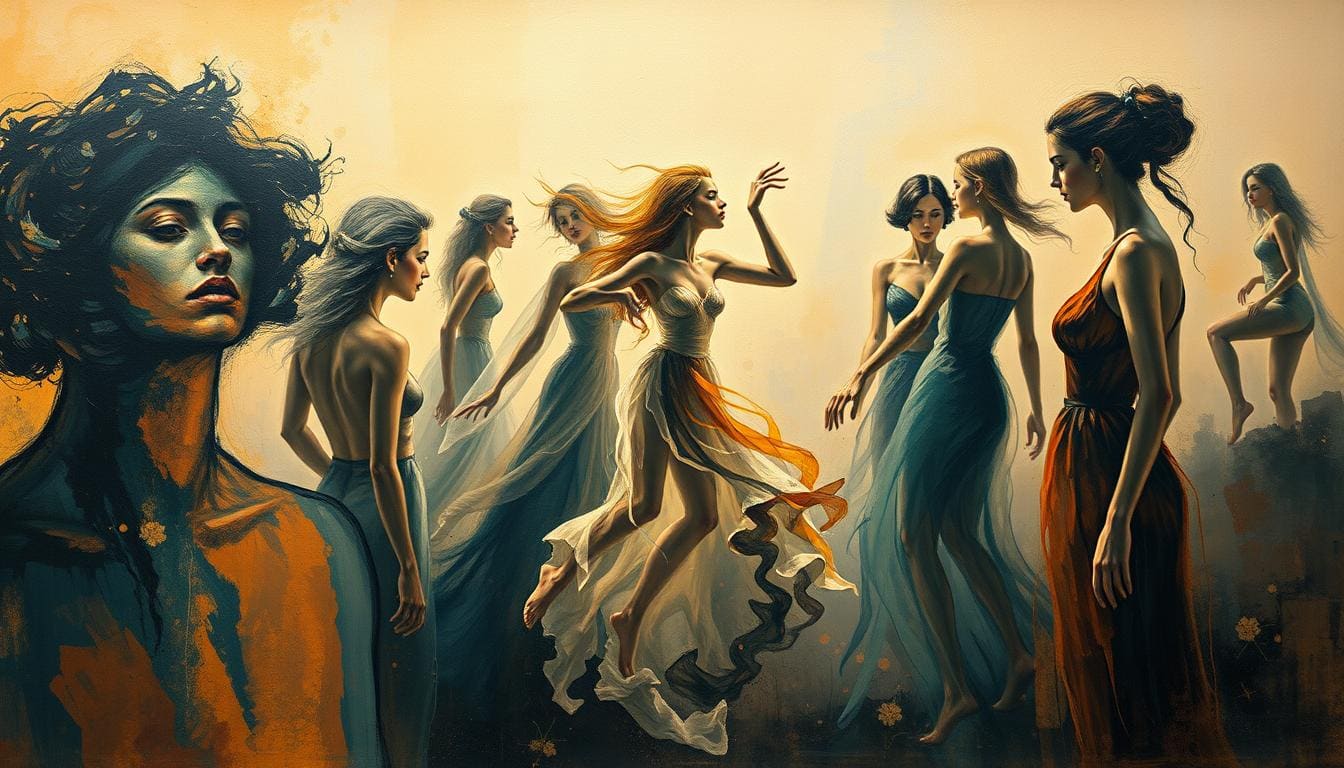
Ever wonder what happens when you delete the male gaze from art history’s search bar? The Surrealist movement reboots, revealing a squad of visionary women. They coded their rebellion into every brushstroke. Forget “muses” – Leonora Carrington and Remedios Varo built entire universes where logic took a backseat to alchemy and myth.
Carrington didn’t just paint – she weaponized egg tempera. Her 1947 masterpiece The Giantess wasn’t merely surreal; it was a Molotov cocktail hurled at patriarchal norms. Varo’s canvases became encrypted diaries, blending quantum physics with medieval grimoires. As Whitney Chadwick notes, these creators weren’t supporting actors – they wrote the Surrealist playbook while their male peers were just starting.
Mexico City became their Hogwarts. When Europe’s art scene treated female artists like expired museum tickets, Mexico offered visas and creative oxygen. Scholar Edward Smart nailed it: this wasn’t exile – it was a laboratory for reinvention. Varo’s Creation of the Birds didn’t just depict magic – it was magic, blending science and spirituality like a mad chemist mixing truth serum.
So why does your art history textbook treat them like footnotes? Time to drag these architects of the uncanny from the margins to the main stage. Their work isn’t vintage surrealism – it’s the original software update.
Female Artists in Early Groups
Imagine a secret society where tapioca was like caviar and art manifestos were on recipe cards. This was the women’s group that changed survival. They were both an artist collective and geopolitical hacktivists.
While men debated Freud in Paris cafés, these women turned Mexico City into a surrealist War Room. They mixed occult symbols with dark humor, even sharper than Frida Kahlo’s eyebrow pencil.
Surrealist Sisterhoods: From Paris Salons to Mexican Exile
The 1940s art scene was full of surprises. When WWII scattered Europe’s avant-garde, Leonora Carrington and Remedios Varo packed more than brushes. They smuggled entire philosophies.
Chadwick’s research shows their Mexico City kitchen was a surrealist legacy factory. They cooked mole poblano and made paintings that questioned reality.
Yves Tanguy once called their work “feminine doodles.” But history proved him wrong. Smart’s analysis shows these refugee artists outsmarted critics with:
- Coded imagery (like a clock melting into a womb?)
- Collaborative exhibitions disguised as dinner parties
- Artistic rituals that made Dada look like kindergarten crafts
Their Mexico City circle was like a surrealist Illuminati. Hungarian photographer Kati Horna documented their living paintings. British painter Alice Rahon turned volcanic ash into pigments.
This wasn’t just art-making. It was geopolitical jiujitsu, turning displacement into creative power.
As one 1943 diary entry noted: “Today’s lesson: How to paint revolution while boiling eggs.” This crew pulled off history’s most dazzling heist, taking surrealism back from the boys’ club.
Pioneers: Carrington, Varo, Tanning, Agar, Sage, Oppenheim, Cahun
While men were fascinated with weird clocks and lobster phones, women were using surrealism’s weirdness for their own goals. These seven artists didn’t just follow the surrealist trend. They changed it, turning Freud’s ideas into feminist messages in dream-like ways.
Alchemists of the Uncanny
Meret Oppenheim’s Object (1936) was more than a joke on Parisian coffee culture. It was a bold challenge to the male-dominated world of art. Her life was a mix of Dadaism, alchemy, and feminism, all shaken together.
Claude Cahun’s photos were like gender experiments long before TikTok. Their 1927 series I Am in Training, Don’t Kiss Me showed identity as a choice, with bold looks and costumes. Chadwick’s Chapter 3 shows how these works were ahead of their time, even predicting queer theory.
Beyond the Male Gaze: Feminist Reimaginings of Surrealist Tropes
Leonora Carrington saw more than muses; she saw creatures to be freed. Her 1942 painting The House Opposite shows homes as places of inner battles, with creatures and living wallpaper. Dorothea Tanning’s Eine Kleine Nachtmusik (1943) is like Alice in Wonderland by Angela Carter, with sunflower girls fighting in hotel halls.
| Male Surrealist Trope | Female Counterattack | Artwork Example |
|---|---|---|
| Woman as passive object | Active shapeshifters | Cahun’s Self-Portrait (1928) |
| Domestic spaces as prisons | Homes as rebellion sites | Varo’s Creation of the Birds |
| Automatic writing | Alchemical cookbooks | Carrington’s The Hearing Trumpet |
The recent show We Are Completely Free highlights these artists’ work. It shows Sage’s dreamy landscapes and Agar’s mixed-media sculptures. This exhibit proves that feminist art not only critiqued surrealism but also saved it from its own male dominance.
Role as Muses and Makers
History often tells us about the silent beauty who inspires men. But what if the muse became the artist herself? Surrealism’s women’s group didn’t just watch from the sidelines. They took over the stage.
From Object to Subject: Reclaiming the Surrealist Narrative
Lee Miller is a great example. She was photographed nude by Man Ray in 1929. But by 1931, she was photographing his tools. It was a transformation, turning the male gaze into her own vision.
Whitney Chadwick writes in Women, Art, and Society that these artists turned the tables. They became the critics of their captors.
Let’s look at some examples:
- Leonor Fini painted The Alcove (1939), a self-portrait that challenged André Breton’s ideas.
- Meret Oppenheim’s fur-lined teacup became a symbol of the movement. It was a domestic item turned into a primal nightmare.
- Leonora Carrington’s Self-Patience (1947) shows her as her own mythical muse.
Dalí’s story also gets a new look. His wife, Gala, was more than just a muse. She helped create his ideas, as Pamela Smart’s analysis shows. Dorothea Tanning and Max Ernst’s relationship was like a surrealist power couple, sharing dream journal entries.
These women changed the surrealist legacy. They moved from being inspiration to being the ones who questioned reality. Their work asks big questions: Who defines reality? Whose dreams are important? These questions continue to shake the art world today.
The Barriers They Faced
Imagine a world where a vulva-shaped landscape is seen as “charming” but not good enough for art galleries. Female surrealists faced a world where their work was celebrated, but only if it didn’t show their own creations. The focus on “feminine mystery” made women’s art seem like a curiosity, not a serious work.
Institutional Absurdism: Fighting the Surrealist Boys’ Club
Let’s play surrealist bingo. You get points for automatic writing (male), found objects (male), and erotic landscapes (male). But if you’re Meret Oppenheim, like with her fur-lined teacup, you’re special. The rule? Women inspired, men created.
Paul Delvaux is famous for his nude sleepwalkers. But Dorothea Tanning’s Birthday self-portrait was seen as just a hobby.
These artists hit three main barriers:
- The Madonna/Whore Canvas: Expected to show primal femininity but was too raw
- The Refugee Paradox: Escaped fascism but was excluded in safe places
- The Signature Catch-22: Male collaborators took credit for women’s work
Chadwick’s research shows a big irony. Surrealist manifestos wanted change but kept Victorian-era gender roles. Leonora Carrington’s creatures were called “charming nightmares” – meaning they weren’t scary enough.
But, fascism had a silver lining. Exile to Mexico and New York let artists like Remedios Varo create freely. These places became incubators for their radical work. This shows that feminist art grows when it’s allowed to.
Today, we learn a lesson. Surrealism’s real absurdity wasn’t weird art. It was thinking women could be in the art, but not making it.
Breakaway Groups and Exhibitions
In dimly lit cafés, Parisian surrealists drafted manifestos. But their female counterparts were busy starting an artistic revolution in Mexico. It was 1943, and Mexico City was alive with exiled artists, feminist poets, and painters. They traded absinthe for mezcal.
Mexico City ’43: The Surrealist Woodstock You Never Heard Of
Imagine Frida Kahlo’s unibrow leading a fight against European elitism. Leonora Carrington painted Mayan deities discussing Freudian theory. Remedios Varo sketched alchemical recipes, while Benjamin Péret debated Marxist dialectics over tamales. It was more than an exhibition; it was a women’s group rewriting surrealism’s rules.
Art historian Whitney Chadwick says these exiles formed “collaborative ecosystems” unlike anything in Europe. They mixed:
- Pre-Columbian spiritual motifs
- Anti-fascist political manifestos
- Experimental poetry workshops
The Mexico City group’s surrealist legacy is in their fight against being seen as passive muses. Hans Arp wrote, “They didn’t just leave Breton’s circle – they built a new continent of thought.”
| Paris Groups (1924-1939) | Mexico City Circle (1940s) | |
|---|---|---|
| Key Focus | Dream interpretation Freudian theory |
Indigenous cosmology Anti-colonialism |
| Exhibition Style | Solo shows in galleries | Collective murals in public spaces |
| Political Engagement | Mostly theoretical | Active resistance networks |
Smart’s study of their letters shows they called their meetings “tertulias subversivas” (subversive salons). Unlike Paris’ male-dominated group, Mexico’s women’s group leaders like Carrington and Varo practiced “kitchen-table surrealism.” They created radical art while dealing with exile, motherhood, and fascist watch.
Their 1943 mural, sadly destroyed in 1952, combined Aztec myths with atomic fears. Picture Dali’s clocks melting on Tenochtitlán’s pyramids. That’s the surrealist legacy that inspires Latin American magic realism today.
Modern Feminist Reassessment
The ultimate plot twist in art history? Female surrealists aren’t just escaping male-dominated textbooks – they’re rewriting them. For decades, their work was overlooked, seen as “eccentric musings” while men took the spotlight. But feminist art scholars have flipped this narrative on its head, much like Leonora Carrington’s reality-bending art.
From Footnotes to Front Matter: Rewriting Art History
Whitney Chadwick’s 1985 book Women Artists and the Surrealist Movement changed art history forever. It showed how these female surrealists were not just sidekicks but key players. By 2023, Remedios Varo’s art was all the rage, with more tote bags sold than the latest Marvel movie. Why the sudden buzz?
Three big reasons explain the shift:
- Academic Validation: Chadwick’s work sparked over 200 dissertations in the last decade
- Blockbuster Exhibitions: The 2022 Venice Biennale gave women surrealists 80% of its space
- Pop Culture Collabs: Varo’s art now stars in TikTok videos with 2M+ views
| Era | Recognition Level | Key Milestone |
|---|---|---|
| 1920s-1970s | Marginalized | Group shows listed as “Wives & Mistresses” |
| 1980s-2000s | Reassessment | Chadwick’s 1985 text shifts academic discourse |
| 2010s-Present | Mainstream | Varo’s 2023 retrospective breaks attendance records |
Galleries now face a delicious irony: once-overlooked works now fetch seven figures, while male peers gather dust. The Chicago show’s visitor demographics show a shift – 68% female, 41% under 35. This isn’t just revisionism. It’s a correction with a dash of poetic justice.
Teaching & Resources
Art education has changed a lot. Gone are the days of boring lessons. Now, classrooms are filled with excitement and creativity. It’s like a whole new world.
Decoding the Surrealist Syllabus: From Chadwick to TikTok
Old textbooks are out. Now, we use art to spark interesting discussions. Here’s how to make your classroom fun:
- Object Lessons: Meret Oppenheim’s fur-lined teacup is more than art. It’s a way to talk about culture and rebellion. Add ASMR videos for a unique experience.
- Identity Remix: Claude Cahun’s self-portraits are a big deal today. Ask students to make collages using Instagram filters.
- Curriculum Hacks: The Chadwick PDF is key, but add #ArtTok for a deeper look. Use Billie Eilish and Frida Kahlo for inspiration.
Universities are now teaching surrealism in new ways. Yale has a course on using AI to understand Leonora Carrington’s work. Community colleges even have Exquisite Corpse workshops online. Students are asked to meme Remedios Varo’s paintings.
Gen Z is finding surrealism online, not in museums. Your new teaching assistant? The comments on @SurrealistMemeArchive. They explain Dorothea Tanning’s work in a fun way. It’s like watching a show.
Conclusion
Surrealism showed us that the ordinary can become extraordinary when seen differently. Female surrealists didn’t just change reality; they reshaped it. They used their art to challenge patriarchal norms, creating works that were both powerful and personal.
Chadwick described their art as a fight against old-fashioned thinking. Each piece was a statement, filled with images of women in power and men out of place. They turned the idea of women as passive into a bold statement, long before today’s talks on setting boundaries.
Their impact is seen in today’s art and culture. Think of Beyoncé’s Lemonade or Greta Gerwig’s Barbie. These works blend personal stories with big ideas, just like the female surrealists did.
Smart’s research shows we’re all trying to understand their art. Why does Remedios Varo’s tower feel like a deep conversation? How did Leonora Carrington make wolf-women seem so familiar? Next time you see a Dalí poster, think of Frida Kahlo’s What the Water Gave Me or Dorothea Tanning’s Eine Kleine Nachtmusik.
The revolution they started is ongoing. And the best part? You can join in for free. Just look for the Museo de Arte Moderno in Mexico City or follow @SurrealHerstory on Instagram.