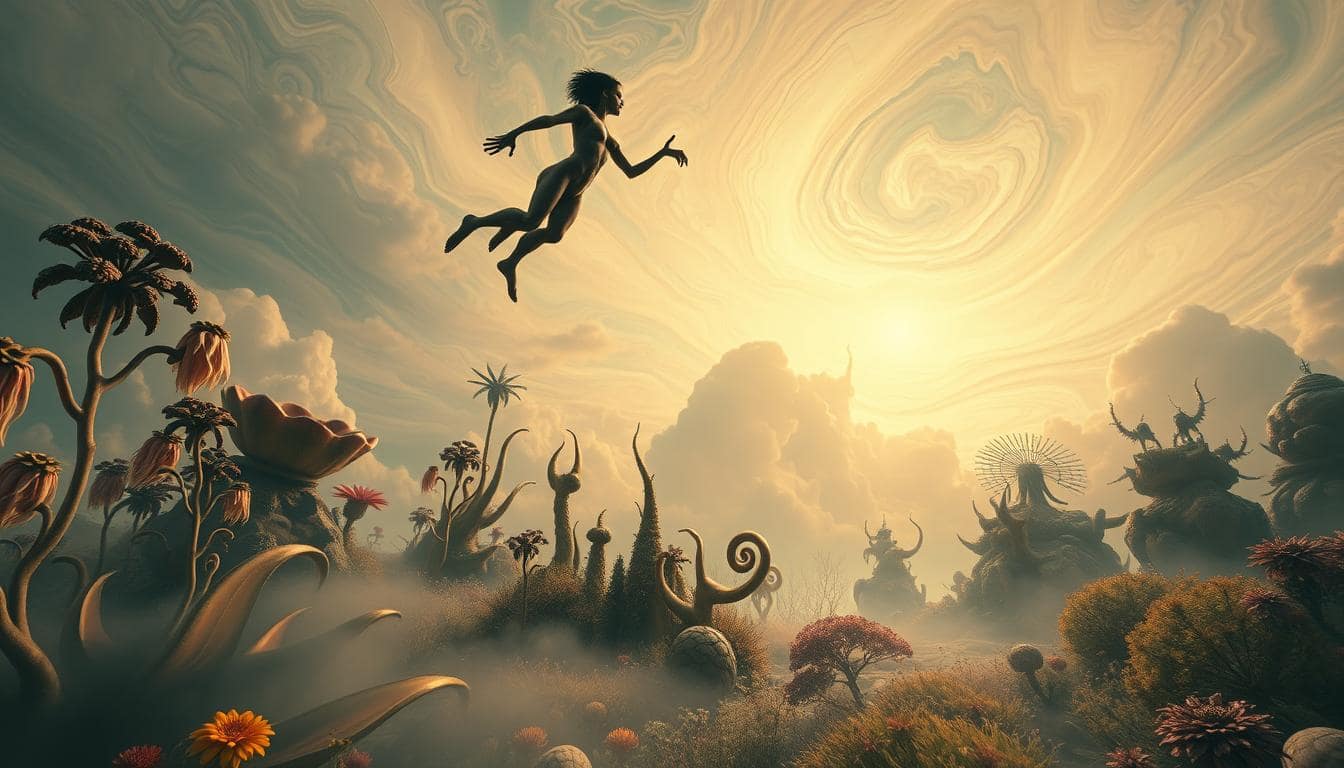
Imagine a pipe labeled “This is not a pipe”. Magritte’s 1929 artwork is a bold statement against literal thinking. Cubists broke reality into shapes, and Abstract Expressionists splattered their feelings. But surrealists used the subconscious as their weapon.
André Breton’s 1924 manifesto declared war on rationality, with Freud as its unlikely ally.
Why does Dalí’s melting clock haunt college dorms, while Picasso’s work is mostly in textbooks? The reason is surrealism’s global tactics. By the 1930s, it had spread worldwide, from Cairo to Mexico City. Breton’s “absolute reality” wasn’t just for Parisian cafés—it was a dream passport for the world.
Surrealism offered organized chaos, unlike Cubism’s math or Abstract Expressionism’s emotions. It’s like the difference between a Rorschach test and a spreadsheet. Surrealists asked, “What if reality’s just the boring prologue?” Their answer—a dream world where lobsters are phones—stuck with us more than Picasso’s angles.
So, why did surrealism, embracing illogicality, last longer than other movements? Maybe reality wasn’t as important as we thought.
The Landscape of Modern Art Movements
Imagine 1920s Europe as a lively art salon. Movements vied for attention like excited intellectuals. Cubism broke reality into geometric pieces at the espresso bar. Futurists blasted the air with speed and dynamism manifestos. Dadaists, in the corner, laughed at the absurdity, smashing champagne flutes.
This was modernism’s playground. Surrealism came in, like a mysterious poet. They locked everyone in the basement to explore dreams.
World War I left artists with a collective existential hangover. They couldn’t paint pretty landscapes after gas warfare. Why sculpt classical nudes when machine guns turned bodies into abstract forms?
Modern art became a therapy session. Cubism dissected reality into fragmented perspectives. Expressionism screamed primal fears through distorted brushstrokes. Dada prescribed absurdity as the only sane response to madness.
Enter Surrealism – the movement that didn’t just question reality but sublet its apartment to the subconscious. While others argued about form and technique, André Breton’s crew raided Freud’s theories like kids in a candy store. Why paint what you see when you could bottle the carnival of dreams?
This wasn’t mere art comparison – it was psychological warfare against rationalism. Where Cubists deconstructed violins, Surrealists made them melt over tree branches. When Expressionists channeled angst, Dalí answered with lobster telephones. The movement’s genius? Turning Freud’s couch into an art supply store.
Modernism’s great irony? The more artists tried to make sense of a broken world, the more Surrealism’s illogical visions felt like truth serum. Their canvases didn’t just reflect reality – they X-rayed its hidden fractures.
What Defines Surrealism?
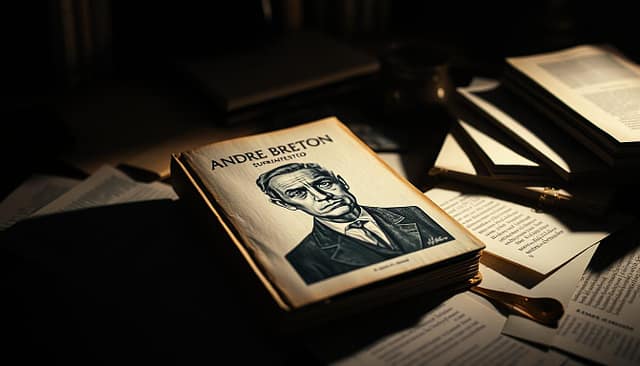
Imagine a Parisian poet throwing down his manifesto like a bombshell in a café. That’s how André Breton started surrealism in 1924. He saw it as a psychic mutiny, not just another art form. His Surrealist Manifesto mixed Freud’s dream theories with art.
Three key elements sparked this revolution:
- Freudian Fireworks: Breton used psychoanalysis to fuel creativity
- Automatic Writing: Artists let their thoughts flow freely, like drunk texting
- Paranoiac-Critical Method: Dalí’s method made weird images, like melting clocks, cool
There was a big fight between Breton and poet Yvan Goll over who owned the term “surrealism.” It was like a Twitter battle in the 1920s. Breton won, showing that boldness is key in art.
Surrealism’s magic was turning artists into psychonauts who explored the mind. Unlike cubists and Dadaists, surrealists dove into our dreamscapes. They didn’t just paint weird stuff; they showed how our minds work.
- They used chance and collage
- They created while in a trance
- They worked together on “exquisite corpse” drawings
This wasn’t just art for fun. It was art as psychological warfare. By blending Freud’s ideas with Picasso’s art, surrealists made therapy sessions that confuse us even today.
Comparing Surrealism with Dada, Cubism, Abstract Art, Expressionism
Imagine Dada as a wild party crasher and Surrealism as the philosopher who stays late to discuss dreams. Tristan Tzara’s random poetry generators felt like throwing alphabet soup at a wall. Magritte’s bowler-hatted men whispered riddles through pipe smoke. Let’s dissect this art-world odd couple – and see how they stack up against Cubism’s geometric puzzles.
Dada vs. Surrealism: Chaos vs. Controlled Madness
Max Ernst’s The Elephant Celebes (1921) – a mechanical beast made from a Sudanese corn bin – screams Dada’s love for absurd collisions. Contrast that with Dalí’s The Persistence of Memory (1931), where time literally melts into Freudian soup. One movement threw cultural shrapnel, the other mapped dream minefields.
| Aspect | Dadaism | Surrealism |
|---|---|---|
| Philosophy | Destroy meaning through randomness | Discover meaning in the subconscious |
| Techniques | Collage, chance operations | Automatic drawing, dream journaling |
| Themes | Anti-war, anti-art | Desire, memory, psychological archetypes |
| Legacy | Punk rock attitude | Hollywood dream sequences |
Now let’s crash this surreal soiree with Cubism’s angular gatecrashers. Picasso’s fractured guitars and Braque’s sliced-up landscapes sought to solve reality like a Rubik’s Cube. Surrealists? They’d prefer to melt the cube into a Dalí-esque puddle. Where Cubism analyzed, Surrealism hallucinated.
Expressionism’s emotional hurricanes share Surrealism’s love for inner worlds – but Van Gogh’s starry nights and Munch’s screams wear their hearts on tortured sleeves. Surrealists preferred their angst filtered through symbolism: think Miró’s floating phalluses or Oppenheim’s fur-lined teacup.
The Verdict? Dada was the shotgun wedding of art and anarchy. Surrealism became its more sophisticated cousin – weird at family dinners, but now quoting Freud between bites of lobster telephone.
Techniques, Themes, and Key Figures
If Surrealism were a cocktail party, Freud would be the grumpy guest arguing with the host. Japanese poets would photobomb the velvet curtains. This movement didn’t just paint dreams—it weaponized them. Let’s start with the tools of rebellion: frottage (rubbing textured surfaces) and grattage (scraping wet paint). These weren’t just art techniques—they were existential cheat codes to bypass rational thought.

Consider Buñuel’s infamous eyeball-slitting scene in Un Chien Andalou. It wasn’t just for shock value. It showed Surrealism’s core thesis: disrupt or die. Miró’s constellation paintings turned celestial patterns into a visual jazz riff—proof that abstraction could pack political punch. Who needs reality when you’ve got automatic writing?
The movement’s global spread was its secret weapon. While Dalí’s melting clocks dominated Western galleries, Kansuke Yamamoto in Japan fused Surrealism with haiku-like minimalism. His photographs of floating kimonos and faceless figures became silent protests against imperialist propaganda. Over in Mexico, Leonora Carrington reinvented the movement through shamanic feminism, painting hybrid creatures that mocked patriarchal norms.
Freud’s influence? It was complicated. Despite Surrealists’ obsession with dream analysis, Freud famously dismissed Dalí as “a complete nutcase.” The irony? Dalí’s paranoiac-critical method (staring at objects until they morph into hallucinations) owed more to Freudian theory than he’d ever admit. Talk about daddy issues.
Surrealism’s Global Hit List
| Artist | Country | Contribution |
|---|---|---|
| Kansuke Yamamoto | Japan | Photographic surreal poetry |
| Leonora Carrington | Mexico/UK | Mythological feminism |
| Joan Miró | Spain | Anti-franco visual codes |
Politics simmered beneath the bizarre imagery. Breton’s manifesto declared Surrealism a revolutionary act, with artists using Freudian tactics to dismantle fascist ideologies. Even Dalí’s limp watches weren’t just about time—they mocked Europe’s crumbling power structures. The movement’s true genius? Turning Freud’s couch into a global protest sign.
Cross-influences and Rivalries
If the Surrealists were a band, their breakup would’ve been huge. André Breton didn’t just lead a movement—he curated enemies lists like a pro. The 1930s were filled with ideological purges, with members kicked out for things like “excessive interest in capitalism” or “insufficient dream journaling.”
Antonin Artaud attacked Breton’s “dictatorship of the subconscious” in 1947. It was a mix of art criticism and a political move. Their fight showed how Surrealism’s problems mirrored Europe’s after the war.
When Dalí started painting for rich people, even his famous melting clocks looked awkward. This was a big change for him.
The messy breakups led to Abstract Expressionism. Artists who were kicked out of Surrealism brought its ideas to New York. Automatic writing turned into action painting, and dream analysis became color field theory. Jackson Pollock’s drips were just Écriture automatique with better marketing.
After World War II, Surrealism’s decline became a test of what people thought:
- Breton’s group: “Marx or death!”
- Dalí’s followers: “Gala wants a yacht!”
- Art critics: “Is that a lobster phone or midlife crisis?”
But here’s the amazing part—Surrealism’s legacy lives on because it failed. Its collapse led to new art forms, from Beat poetry to psychedelic rock. When a movement’s impact lasts longer than its original ideas, you know it’s had a big impact. Did the Surrealists write their own end, or did they spark a new artistic era?
Surrealism’s Place in Art History
If Surrealism were an iPhone update, we’d all be using version 1.0 with better apps. Unlike other 20th-century movements, Surrealism has stood the test of time. It has become the operating system for modern weirdness.
From Tokyo’s neon-lit anime studios to Brooklyn’s meme factories, Surrealism’s influence is everywhere. Dalí’s melting clocks are more than just a phase. They symbolize the internationalization of surrealism.
Today’s artists don’t need lobster telephones anymore. They have Photoshop’s liquefy tool. Björk’s VR music videos are a perfect example of surrealism legacy in the digital age.
AI-generated nightmares from platforms like Midjourney are just Max Ernst’s decalcomania technique on steroids. The movement’s DNA thrives in:
- Instagram filters that turn selfies into Dalí-esque distortions
- TikTok trends where gravity-defying dance moves meet Magritte logic
- NFT collections featuring blockchain-powered dream diaries
The “distracted boyfriend” meme is our generation’s take on Magritte’s Son of Man. Both question reality, but our meme adds a twist. This isn’t dilution; it’s evolution.
When Japanese artist Hayao Miyazaki crafts floating castles in Spirited Away, he’s serving surreal kaiseki to Andrè Breton’s absinthe cocktail. This shows how surrealism has evolved.
| Era | Medium | Philosophy |
|---|---|---|
| 1924 Paris | Oil paint & manifestos | “Destroy rational tyranny” |
| 2024 Global | AR filters & viral posts | “Destroy attention spans” |
Creators like David Lynch and Pipilotti Rist prove surrealism’s internationalization is a mindset. Lynch’s talking rabbit in a sitcom set and Rist’s psychedelic vulvas in Swiss museums answer Breton’s call: “Transform the world, change life.”
The real question is whether TikTok’s #SurrealChallenge videos represent artistic democratization or digital dada. Either way, that melting clock on your Apple Watch face? Surrealism won.
Lasting Legacy and Unique Impact
Surrealism didn’t just disappear into history books. It changed how we see the world every day. From Tim Burton’s dark fantasies to Instagram’s weird photos, its spirit lives on. Dalí would call it “deliciously deranged.” But how did a movement focused on dreams become a part of ad campaigns and millennial memes?
It’s ironic that Surrealism became mainstream by embracing its rebellious side. Like punk rock, it turned being different into a marketable brand. Jeff Koons’ balloon animals? They’re seen as either a bold critique of capitalism or “what happens when Duchamp shops at Walmart.” It depends on who you talk to at the MoMA.
The movement’s influence in academia is clear. But its real impact is in the world of commerce:
- Fashion runways with Escher-like tricks
- Music videos inspired by Buñuel’s work
- Tech companies using dream analysis for design
But Surrealism’s popularity led to its decline as a distinct movement. It made the irrational mainstream, turning every smartphone owner into an accidental Surrealist. Your cousin’s TikTok with melting clocks? That’s not just a video—it’s a nod to automaticism for today’s fast-paced world.
So, is Surrealism dead? No way. It just evolved, using memes and algorithms to spread its ideas. The movement’s last laugh? Becoming timeless by letting everyone use its ideas.
Teaching the Differences
How do you explain Salvador Dalí’s melting clocks to students without losing them to TikTok? Start with Max Ernst’s collages. Show how his layered, dreamlike compositions are like Photoshop tabs left open. Each element is a subconscious decision preserved in visual history.
Compare Ernst’s Une Semaine de Bonté to modern digital layering techniques. Students who’ve edited Instagram Stories will understand surrealism’s obsession with fractured realities.
André Breton’s manifestos need patience, like a Christopher Nolan plot twist. Pair readings with Dalí’s lobster telephones or Méret Oppenheim’s fur-lined teacup. Ask: “Does this make your brain itch?” That’s surrealism working.
Dada’s chaos is clear when seen as art’s rebellious teenage phase—all shock value and bathroom humor. Surrealism? It’s the grad-school philosopher who knows how to party.
Create assignments comparing Magritte’s Treachery of Images to Warhol’s soup cans. Which makes you question reality harder? Use meme formats to dissect surrealism vs other art movements. Memes thrive on absurd juxtapositions too—they’re just faster and cheaper than oil paint.
The goal? Prove that art comparisons aren’t dusty museum debates but live wires connecting Dalí’s paranoiac-critical method to our algorithm-driven confusion.
Keep textbooks closed. Play Buñuel’s Un Chien Andalou on mute while students write dialogue. Watch them out-surreal the surrealists. Because teaching this stuff isn’t about memorizing dates—it’s about weaponizing weirdness to see the world sideways. Now pass the wine. We’ve got manifestos to decode.