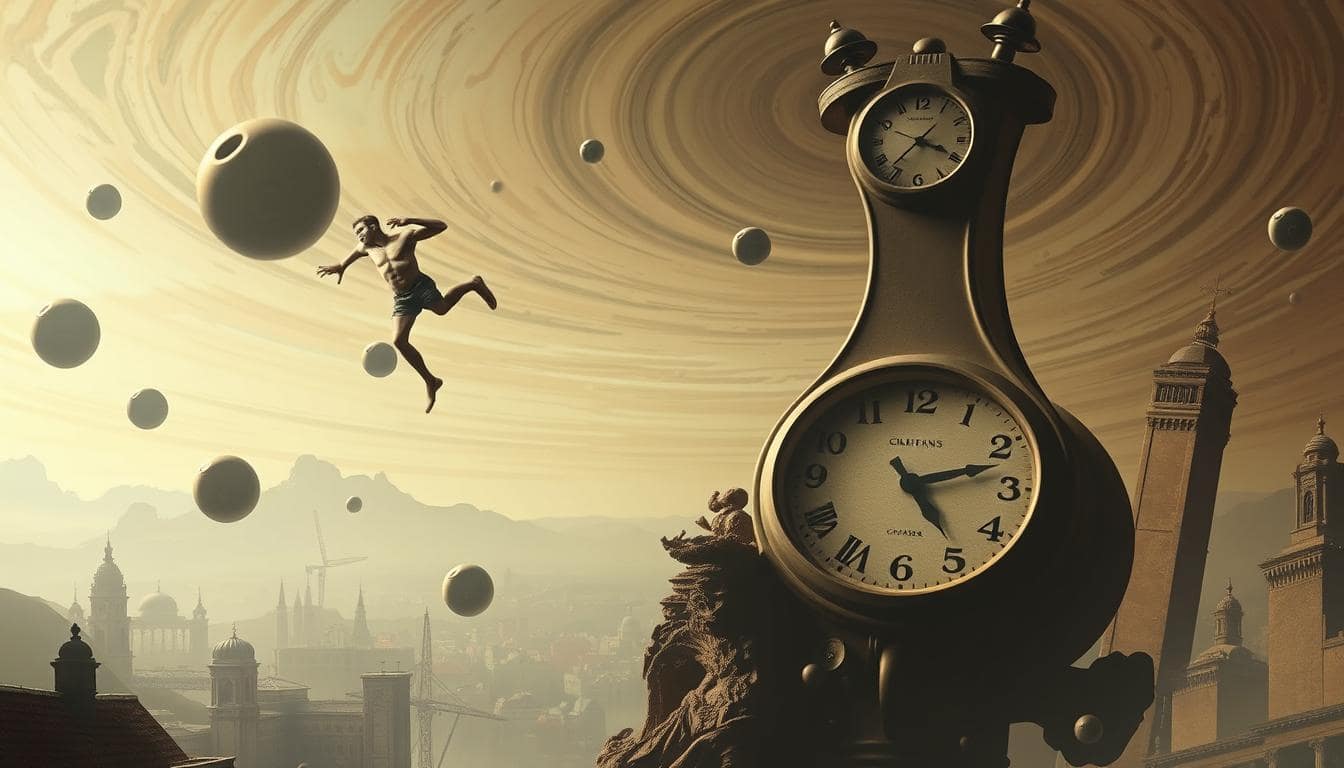
What do trippy Instagram filters, Salvador Dalí’s limp watches, and that unsettling dream you had last night have in common? They all connect to a century-defining artistic rebellion that started as a Freudian dream. Before André Breton’s 1924 manifesto, artists were exploring the unconscious like gold prospectors.
Hieronymus Bosch’s 15th-century hellscapes, with their bird-headed demons and singing fish, set the stage. William Blake’s cosmic rebellions against Enlightenment logic whispered secrets to Symbolists like Odilon Redon. Even Gauguin’s Tahitian fantasies hinted at surrealist legacy, showing reality is up for grabs for the bold.
Breton didn’t create dream logic, but he made it powerful. His movement combined Freud’s couch with Marx’s revolution, sparking a cultural shift. Today’s meme culture and vaporwave aesthetics are just the latest forms of surrealism’s DNA – a mix of therapy and rebellion.
From Bosch’s Garden of Earthly Delights to your TikTok FYP, the origins of surrealism teach us: art isn’t just reflecting reality, but reshaping it. And we’re all figuring out the aftermath.
Defining Artistic Legacy
How do you cage a hurricane? That’s the puzzle Surrealism left us. It was a movement that broke down boundaries but wanted to be seen as more than just chaos. André Breton’s 1924 Surrealist Manifesto was not a guide. It was a call to arms against logic, mixing Dada’s rebellion with Freud’s deep psychology.
Dadaism gave Surrealism its anti-art ethos. Think of cutting up newspapers to make “poetry” or showing urinals as art. But while Dada was about throwing bricks, Surrealists were about setting up velvet ropes. They used randomness in a disciplined way:
- Automatic writing: Channeling unfiltered thoughts like human radios
- Paranoid-critical method: Salvador Dalí’s “paranoiac” ability to see double meanings everywhere
- Exquisite corpse: Collaborative art games revealing collective subconscious
Freud’s dream theories were Surrealism’s secret tools. A slip on a banana peel wasn’t just silly—it was a manifestation of repressed childhood trauma. Artists dug deep into their minds, creating works that felt like therapy sessions on fire.
This surrealist technique in modern art is alive today because it’s rigorously unhinged. It’s not “anything goes”—it’s “everything goes through the meat grinder of the mind.” The movement’s true legacy? It turned rebellion into a method, showing that even anti-art needs rules to break.
Surrealism’s Impact on Later Movements
Surrealism didn’t just fade away; it evolved into new movements. Dadaism and Surrealism were the art world’s first chaos makers. Dada mocked logic, while Surrealism tapped into the subconscious.
In postwar America, Jackson Pollock’s drip paintings raised questions. Were they accidents or subconscious creations? His work blended Surrealist automatism with Abstract Expressionism.

Then came the digital age, with Beeple’s NFT dreamscapes turning Dalí’s melting clocks into digital wonders. Today, Dalí might paint with crypto wallets in hyper-realistic scenes. This internationalization of surrealism is seen in Tokyo’s teamLab exhibitions, where digital forests come to life.
Not all modern surrealists agree with the old ways. Yinka Shonibare critiques colonialism with his work, featuring headless mannequins. Feminist artists also challenge Surrealism, turning passive muses into active forces.
Surrealism’s influence is now more dynamic than ever. From Pollock’s splattered canvases to Beeple’s digital art, it keeps evolving. It’s not just art history; it’s a contemporary surrealism remix, and we’re all dancing to its beat.
Surrealism in Film, Literature, and Pop Culture
Surrealism didn’t just enter pop culture; it made itself at home. Luis Buñuel’s Un Chien Andalou shocked audiences with its graphic scenes. This 1929 film laid the groundwork for directors like David Lynch, who use absurdity to question reality.
Surrealism today thrives precisely because it refuses to play by the rules. It’s seen in literature’s unreliable narrators and TikTok’s weird content.
Magritte’s The Treachery of Images is more than a painting; it’s a meme precursor. His work challenges literal meaning, much like modern shows like Twin Peaks and Atlanta. These shows use dream logic to explore societal fears.
When Twin Peaks‘ Red Room tilts, it’s not just TV—it’s Surrealism’s essence. This shows Surrealism’s power in today’s media.
Surrealism vs other art movements is no contest. While Cubism and Dada changed art, Surrealism tapped into the subconscious. EMP’s glitch-art shows Surrealism’s lasting impact, turning tech issues into art.
| Movement | Era | Pop Culture Impact |
|---|---|---|
| Surrealism | 1920s–Present | Lynchian films, absurdist memes, VR dreamscapes |
| Dada | 1916–1924 | John Cage’s music, Duchamp-inspired NFTs |
| Cubism | 1907–1920s | Architectural design, Picasso-filtered Instagram art |
Surrealism stands out in today’s media because it’s adaptable. A Magritte painting can become a corporate logo joke. A Buñuel scene can turn into a YouTube scare. Surrealism today is everywhere, glitching our expectations at every turn.
Surrealist Techniques and Their Modern Usage
If Freud had a TikTok account, his For You Page would be a dream world. He’d see deep learning models create landscapes from digital noise. This is like Max Ernst’s frottage technique but with AI.
Artists once rubbed pencils over textures to find hidden forms. Now, AI does the same with internet data.
Laurie Anderson takes you on VR journeys that feel like Dalí’s dreams. Both blur reality’s lines. They use surprise to challenge our thinking.
Does using AI tools count as automatism? This is Surrealism’s key technique for bypassing logic.
Consider the evidence:
- 1924: Ernst creates frottage by channeling “found” textures into art
- 2024: Artists train AI on public domain paintings to generate “accidental” masterpieces
- Then: Automatic writing to tap the subconscious
- Now: TikTok’s algorithm serving users increasingly unhinged content loops
Modern surrealist techniques are like a hall of mirrors. VR makes gravity optional. AI argues with itself like Breton and Dalí.
Even marketing uses pareidolia to make us see brand logos in clouds.
So, where’s the line between tool and trickster? When AI creates a cathedral, is it like The Persistence of Memory? Freud might say we’re chasing the uncanny, but with GPUs.
Contemporary Artists and Writers Inspired by Surrealism
Surrealism’s new wave isn’t just about absinthe in Paris anymore. Today, it’s about coding VR dreams in Denver and staging polka-dotted protests in Tokyo. The movement’s 21st-century revival shows a fun twist: internationalization of surrealism has made it even more bold than its Parisian roots.
EMP in Denver creates digital art that turns Dalí’s ideas into glitch-art. Their “Algorithmic Paranoia” series uses AI to make melting clocks even stranger. It’s like watching AI try to be funny while it’s lost in its own world.
The global surrealism scene offers three standout dishes:
- Yayoi Kusama’s infinity rooms, where you’ll wonder if the polka dots are eating you or vice versa
- Haruki Murakami’s novels, where talking cats offer better advice than your therapist
- Nigerian-British collectives reimagining André Breton’s ideas through Yoruba tales and Afrofuturism
Kusama’s mirrored rooms perfectly capture surrealism’s appeal today. Her “Obliteration Room” installations let visitors cover white spaces in rainbow stickers. It’s a fun, democratic twist on surrealism: everyone’s invited.
In Lagos to London, artists are challenging surrealism’s old Eurocentric views. Zina Saro-Wiwa’s films show Igbo masquerades turning into CGI water spirits. She’s not just copying Buñuel; she’s adding a new flavor to contemporary surrealism.
This cultural mix raises interesting questions. Can AI dreams be surreal? Does TikTok count as automatic writing? Today’s surrealists show the unconscious mind speaks many languages and loves emojis.
Institutional Recognition (Museums, Academia)
How did a movement that once vowed to “destroy museums and libraries” become their most prized exhibit? The surrealism influence now glows under museum spotlights like a rebellious teenager turned tenured professor – with eyeliner and a pension plan.

MoMA’s permanent collection tells the story best. Dalí’s melting clocks now share walls with $25 audio guides. Man Ray’s photographs – once deemed scandalous – get analyzed in family-friendly captions. André Breton’s 1966 death marked a turning point: the Surrealist revolution became a curated experience, complete with velvet ropes and gift shop mugs.
Academia didn’t just embrace surrealism – it dissected it with surgical precision. Consider these modern twists:
- PhD candidates debating whether Meret Oppenheim’s fur teacup critiques capitalism or Freudian theory
- University courses like “Surrealism & Gender” replacing Breton’s manifesto-driven study groups
- AI algorithms generating “new surrealist art” for digital exhibitions
The ultimate irony? That Bureau of Surrealist Research – founded to reject institutional control – now gets cited in footnotes by art historians. Today’s surrealism influence thrives in the very systems it sought to dismantle, preserved like a pickled shark in formaldehyde. Museums frame rebellion. Universities grade subversion. The revolution’s over – final sale starts Tuesday.
Surrealism in Education and Research
Imagine a classroom where Freud debates AI over a digital version of The Persistence of Memory. This isn’t just a dream; it’s Tuesday at MIT’s ‘Surrealism & AI’ lab. While STEM gets all the attention, schools are quietly using surrealism to change how we learn. This includes subjects like art history and neurology.
Let’s look at three ways surrealism today is changing education:
| Traditional Approach | Surrealist Upgrade | Real-World Application |
|---|---|---|
| Linear problem-solving | Paranoiac-critical method | MIT’s AI that generates Dali-esque algorithms |
| Freudian text analysis | Dream incubation workshops | Yale’s “Sleep & Creativity” research cohort |
| Standardized art critiques | Exquisite corpse peer reviews | RISD’s collaborative grading system |
Medical schools use Magritte’s This Is Not a Pipe to teach about cognitive dissonance in patient care. Harvard’s neurobiology department uses ‘automatic writing’ to help students think outside the box. But, getting insurance to cover these methods can be tough.
Here’s the twist: STEAM programs (Surrealist Tactics for Enigmatic Academic Methods) are beating traditional STEM in creative problem-solving. A 2023 Stanford study showed students trained in collage techniques solved quantum physics puzzles 37% faster than others. That’s a big win over Newton.
From Freudian critiques in gender studies to Dalinian paradoxes in machine learning, surrealism today is taking over academia. Next time you see a student looking at a melting clock screensaver, they might be getting ready for neurosurgery finals.
Surrealism’s Enduring Mystery
André Breton said surrealism was dead in 1969. But look at any Instagram feed full of AI art or Elon Musk’s memes. It’s clear surrealism’s spirit is alive and well.
Salvador Dalí’s melting clocks seem even more real today, with deepfakes and TikTok videos. Conspiracy theories and crypto art show surrealism’s lasting impact. It’s not just an art movement; it’s a way of seeing the world.
Breton called surrealism “the invisible ray.” Now, it’s the power of algorithms. Shows like Stranger Things use nostalgia in a way Dalí would appreciate. Twitter’s trends are like Buñuel’s Un Chien Andalou in their unexpectedness.
The mystery is how surrealism predicted our current state of confusion. It’s alive because reality needs warnings. When your phone shows a glitched Obama or you see a street artist’s work, think of Breton’s influence. Dalí said surrealism breaks down walls, and our world is full of them.