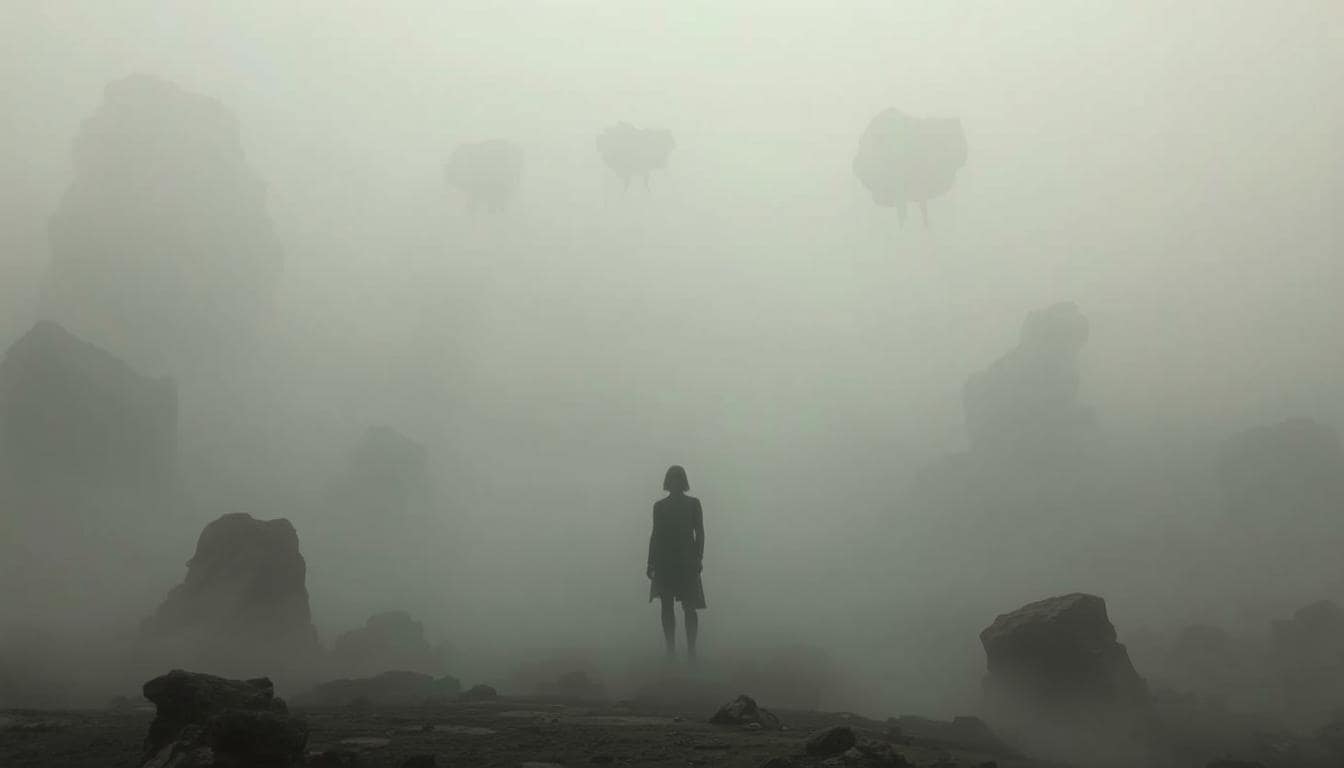
Reality is overrated. In 1924, André Breton declared war on the mundane with his Surrealist Manifesto. He proposed a radical definition of surreality as the “resolution of dream and reality into an absolute reality.” Imagine Salvador Dalí’s drooping clocks next to Descartes’ rationalist textbooks—a visual middle finger to logic. This wasn’t just art. It was philosophy with a paintbrush.
Post-WWI Europe craved rebellion. Surrealists used Freud’s theories, mining the subconscious like prospectors hunting psychic gold. Why settle for either waking life or dreams when you could fuse both? Breton’s manifesto became their playbook, blending automatic writing with absurdist imagery to bypass society’s “rational” filters. Even Magritte’s infamous pipe (“This is not a pipe”) mocked our trust in literal perception.
But here’s the twist: surrealism wasn’t escapism. It was hyper-realism. By smashing reality’s mirror, artists revealed deeper truths about desire, fear, and the human condition—much like how is ai being used in sports analytics today reveals hidden patterns in athlete performance that the naked eye cannot detect. When the world’s on fire (literally, given WWII’s looming shadow), maybe melting clocks make more sense than Newtonian physics. After all—if life’s absurd, shouldn’t our art be too?
Defining Surreality and Its Origins
Let’s explore the term ‘surreality’ like a philosophical piñata. What absurd treasures spill out? The word first showed up in 1917, when poet Guillaume Apollinaire used it for Jean Cocteau’s ballet Parade. But Breton later took it and used it to challenge Europe’s love for logic.
After World War I, Europe wasn’t just fixing buildings. It was also rebuilding its view of reality. The Dadaists, art rebels, were turning logic into confetti at their parties. They mixed nihilism and absurdity, creating the base for Breton’s surrealist philosophy.
Breton used Freud’s dream theories to fight the trauma of the war. Soldiers came back with nightmares, so Breton made those nightmares the new curriculum. His 1924 manifesto declared war on reason’s rule. The battle was in the human mind’s unknown areas.
Three key ingredients fueled this reality rebellion:
- Hegel’s dialectical battles (thesis vs. antithesis in a boxing ring)
- Freud’s uncensored id (because who doesn’t want to psychoanalyze their dreams?)
- The collective PTSD of a generation that saw civilization nearly self-destruct
Here’s the kicker: Breton’s reality vs. surreality clash wasn’t about escaping the world. It was a tactical strike against the “regime of logic” – the idea that life must make sense. In an age of gas masks and shell shock, insisting on rationality seemed truly insane.
Breton’s Surrealist Manifesto and Philosophy
André Breton’s 1924 Surrealist Manifesto was more than a pamphlet—it was a challenge to the rational world. Imagine Karl Marx writing poetry after drinking three espressos. Breton’s philosophy of art rejected logic, embracing the chaos of dreams and Freudian slips. His manifesto was a guide for creative anarchy.
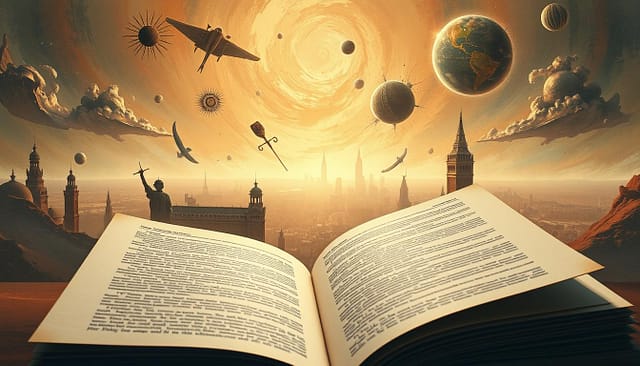
The main idea was “Pure psychic automatism”, letting your subconscious guide your writing. It was like Jackson Pollock meets Freud’s therapy couch. Breton’s followers wrote automatically, creating texts as enigmatic as a fortune cookie by Dali. But it was more than just art therapy—it was a political statement.
Why did Parisian cafés become battlegrounds? Breton’s ideas sparked debates:
- His Freud surrealism mix upset both psychoanalysts and communists.
- New manifestos emerged quickly, each claiming to be the true surrealism.
- Breton kicked out those who disagreed, like a pope dealing with heresy.
The manifesto’s lasting impact? It made art a psychological battle. Breton wanted more than pretty pictures—he sought a complete change in how we see the world. His dream was a society where dreams are more real than reality, and our id has a say in culture. Even today, his question remains: “What if our waking life is the real delusion?”
Surreality in Artistic Expression
Did you know surrealists created reality filters 100 years before Instagram? They used automatism in art – a way to bypass logic and tap into creativity. It’s like a Ctrl+Alt+Delete for the mind.
Max Ernst’s frottage technique was more than just rubbing pencil on surfaces. It was a way to find hidden patterns, like finding Easter eggs in reality. His art became like Rorschach tests for the modern world.
Ernst played with chance, while Magritte used juxtaposition in art to challenge our minds. His famous Treachery of Images showed how familiar objects can be seen in new ways. It’s like deepfake philosophy from the 1920s.
These methods were key to the surrealist worldview:
| Technique | Reality Hack | Modern Equivalent |
|---|---|---|
| Automatism | Bypassing conscious control | AI-generated art prompts |
| Juxtaposition | Contextual shock therapy | Viral meme culture |
| Exquisite Corpse | Crowdsourced unconscious | Twitter thread collabs |
These artists created shared hallucinations before virtual reality existed. Their art became a space where viewers could interpret and complete the artwork. It was the first interactive media.
Surrealism’s impact is seen everywhere, from TikTok trends to corporate team-building. We’re all exploring Breton’s world now. The question is, which reality shall we challenge today?
Case Studies: Visualizing Surreality
Let’s look at two surrealist masterpieces from the 1920s. They are like viral memes that crash our brains today. First, Magritte’s The Treachery of Images is like the first “Well actually…” in art history.

Magritte’s famous pipe is more than a painting. It’s a philosophical shock. The caption “This is not a pipe” turns a simple picture into a test of how we see things. Our brains struggle to understand the mix of image, text, and reality.
Next, Dalí’s The Persistence of Memory shows clocks melting like cheese in the sun. It’s not just dream analysis surrealism in action. It’s a challenge to our idea of time. Dalí tells us that reality can melt away when our dreams take over.
So, why do these illogical scenes surrealism keep affecting us? Here’s why:
- Magritte uses words to show us our own biases
- Dalí messes with physics, asking if time needs to be strict
These artists didn’t just paint weird pictures. They created visual puzzles that mess with our brains. Even today, we’re trying to figure out their secrets like art detectives with too much coffee.
Classroom Debate: What Is Reality?
When students dive into TikTok trends through André Breton’s automatic writing, you know you’ve hit a mark. Forget boring lectures on existentialism. Today’s classrooms are all about exploring Meret Oppenheim’s fur-lined teacup and questioning if Instagram’s algorithm is objective chance surrealism.
- Surrealist Showdown: Students dissect Oppenheim’s Object (1936)—a teacup with gazelle fur. Is it art? A prank? Or a Freudian dream? The debate shows how context changes our view of reality.
- Algorithmic Exquisite Corpse: Use AI to create Instagram grids instead of paper collages. Teams give the algorithm weird hashtags (#DaliLovesDunkin) and look at the surreal results. It’s a digital twist on Breton’s games.
Need a lesson plan? Here’s one:
| Activity | Traditional Approach | Surrealist Remix |
|---|---|---|
| Critical Analysis | Essay on Plato’s Cave | Compare Duchamp’s urinal to viral TikTok challenges |
| Creative Exercise | Draw a simple scene | Make useless objects with ChatGPT and thrift store items |
| Debate Topic | “Is art subjective?” | “Is your Instagram feed more absurd than a Magritte painting?” |
The real magic is when students see surreal elements in their own lives. When a teen links their For You Page to Max Ernst’s collage novels, it’s pure gold. One student said, “My math teacher’s grading is as confusing as a Duchamp readymade.”
So, does teaching objective chance surrealism through memes and meta-commentary work? When a classroom debate about Snapchat filters turns into a talk about collective consciousness, you’ll know the answer.
Surreality in Modern Art and Culture
Corporate retreats now use “creativity exercises” inspired by 1920s surrealists. This shows even capitalism loves a good game. David Lynch’s Twin Peaks reboot and Haruki Murakami’s novels show how psychic automatism has grown. It’s moved from inkblot tests to weirdness made by algorithms.
We live in a time where Dalí’s ideas seem like TikTok tutorials. This shows how surrealism has spread far beyond art.
David Lynch views Hollywood as a way to explore fame. His Mulholland Drive uses disjointed stories to analyze fame like Freud’s dream analysis. Haruki Murakami uses symbolism in surrealism to turn everyday things into deep questions. Their work shows surrealism is everywhere, from TV shows to books.
But here’s a twist: Silicon Valley uses surrealism for “innovation workshops.” The same ideas Breton used to challenge reality help tech leaders come up with new ideas. It’s a strange connection.
| 1920s Surrealist Technique | Modern Corporate Adaptation | Cultural Impact |
|---|---|---|
| Exquisite Corpse | Agile sprint brainstorming | Shared delusions of productivity |
| Automatic Writing | AI-generated marketing copy | Brands cosplaying as human |
| Paranoiac-Critical Method | Deepfake detection software | Reality as choose-your-own-adventure |
Elon Musk’s tweets and deepfake politics show how psychic automatism meets online trends. TikTok’s #Surrealism hashtag has millions of views. It turns Magritte’s famous painting into a meme. Is this good or bad? It depends on your view of art and business.
Murakami’s talking cats and Lynch’s dancing dwarfs show surrealism’s power. It helps us understand a world where reality is fuzzy. The big question is: Are we making art, or are we characters in Dalí’s painting?
Critical Perspectives
Let’s talk about the elephant in the surrealist room. The movement wasn’t just about melting clocks and poetic rebellions. There were controversies that make art historians use their analytical microscopes. How do we balance groundbreaking creativity with regressive politics?
The femme-enfant archetype in surrealist art wasn’t just quirky symbolism in surrealism. Feminist scholars say it shows Freudian obsessions that are toxic. Breton’s manifesto used Freud’s theories to reduce women to muses, not makers. When Meret Oppenheim created her iconic fur-lined teacup, did her male peers see genius or just another “deliciously irrational” female?
Then there’s the political controversy even Dalí’s lobsters can’t hide. The 1936 “Contre-Attaque” group’s flirtation with fascism is like bad performance art today. Breton expelled Dalí for monarchist sympathies, yet kept working with Bataille – the philosopher who wrote about erotic violence. Surrealism’s ideals often clashed with authoritarian impulses, like a train in a Magritte painting.
Three key controversies need to be looked at:
- Gender Dynamics: Only 5 women were featured in MoMA’s 2012 surrealism survey – out of 100 artists
- Colonial Blindspots: Primitivist borrowings from African art, with no credit given
- Ethical Contradictions: Anti-capitalist manifestos vs. Dalí’s later commercial pandering
The movement’s symbolism in surrealism gets tricky when looking at its racial politics. That ceremonial mask in Ernst’s collage? It’s cultural appropriation. The “exotic” nudes in Man Ray’s photos? They’re colonial fantasies dressed as radical eroticism.
Does this mean we should ignore surrealism’s achievements? No. But it makes us question: Can we separate groundbreaking art from problematic creators? As Breton might say – the answer’s hidden between the question and the question mark.
Conclusion
Surrealism made us believe in melting clocks and lobster phones. It’s been a century, and the surrealist worldview is now our everyday reality. We start our day with TikTok, discuss AI at lunch, and end with deepfake news. And we all wear our pants correctly on Zoom.
The surreality concept thrives by asking the right wrong questions. Why stick to reality when you can change it? Today’s culture shows Duchamp’s urinal was just the start of our daily weirdness. Your Slack channel is like modern poetry, and that HR email? It’s like automatic writing.
Surrealism isn’t dead; it just moved to the digital world. When your video call turns into a Dali scene, it’s not a glitch. It’s part of the longest avant-garde experiment. Keep Breton’s spirit close when reality gets too much. His mix of Freud and dark humor beats most corporate speak.
Your task? Spot three surrealist worldview moments by lunch tomorrow. The crochet-covered parking meter? Salvador’s spirit animal. Your coffee’s Rorschach stain? A free therapy session. Reality’s always up for grabs; we just choose to remix it.